BAKU, Azerbaijan, October 21.
Commissioning of new large container ships is expected in the
Caspian Sea next year, Deputy Chairman of the Azerbaijan Freight
Forwarders Association and General Director of U.F.E. Shipping,
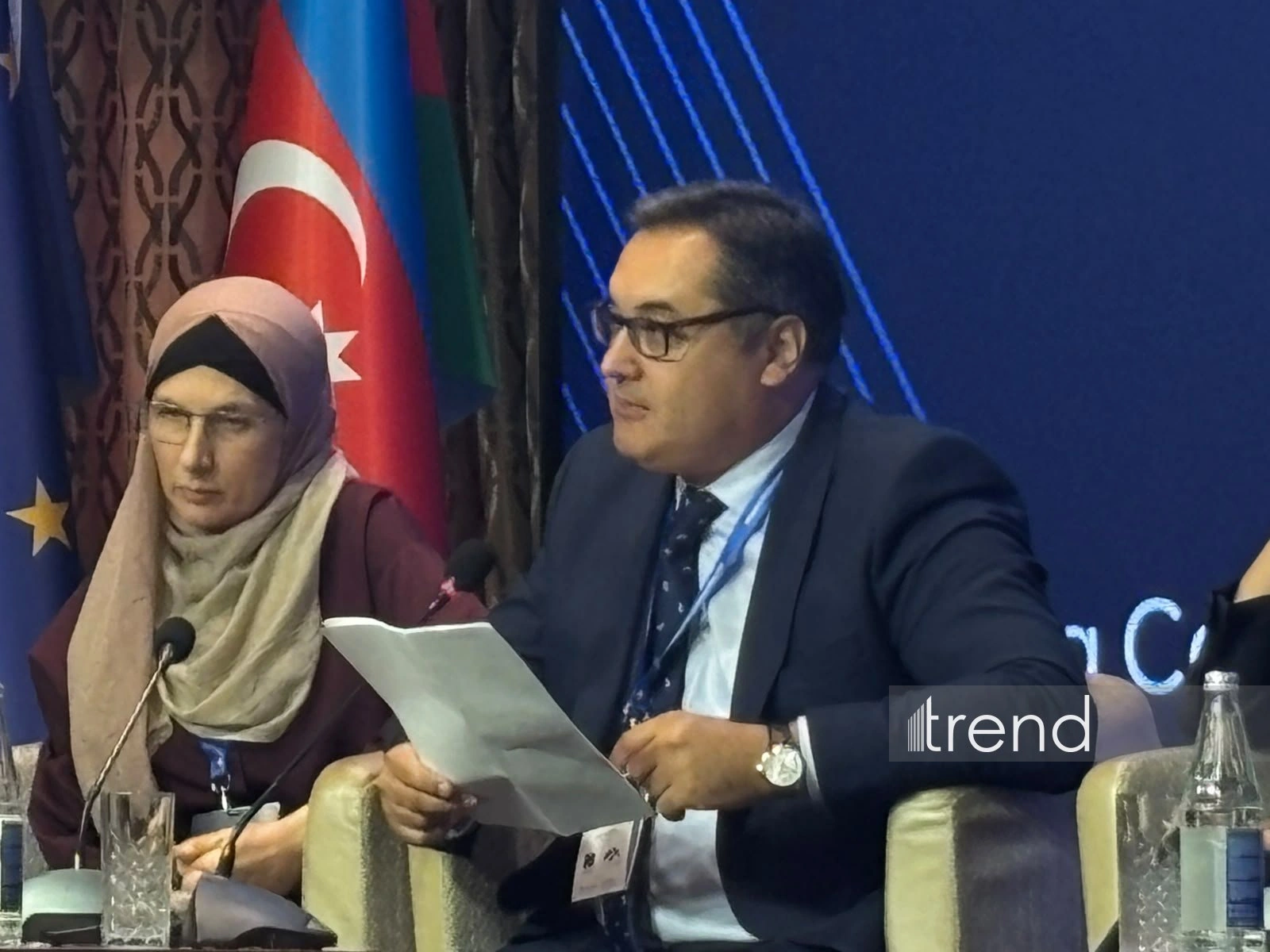
Elmir Poladov, said at the EU-Azerbaijan Business Forum in Baku on
Wednesday, Trend’s
correspondent reports from the event.
According to him, the limited availability of vessels in the
Caspian Sea, congestion at transshipment points, and insufficient
integration of information systems remain the main obstacles to the
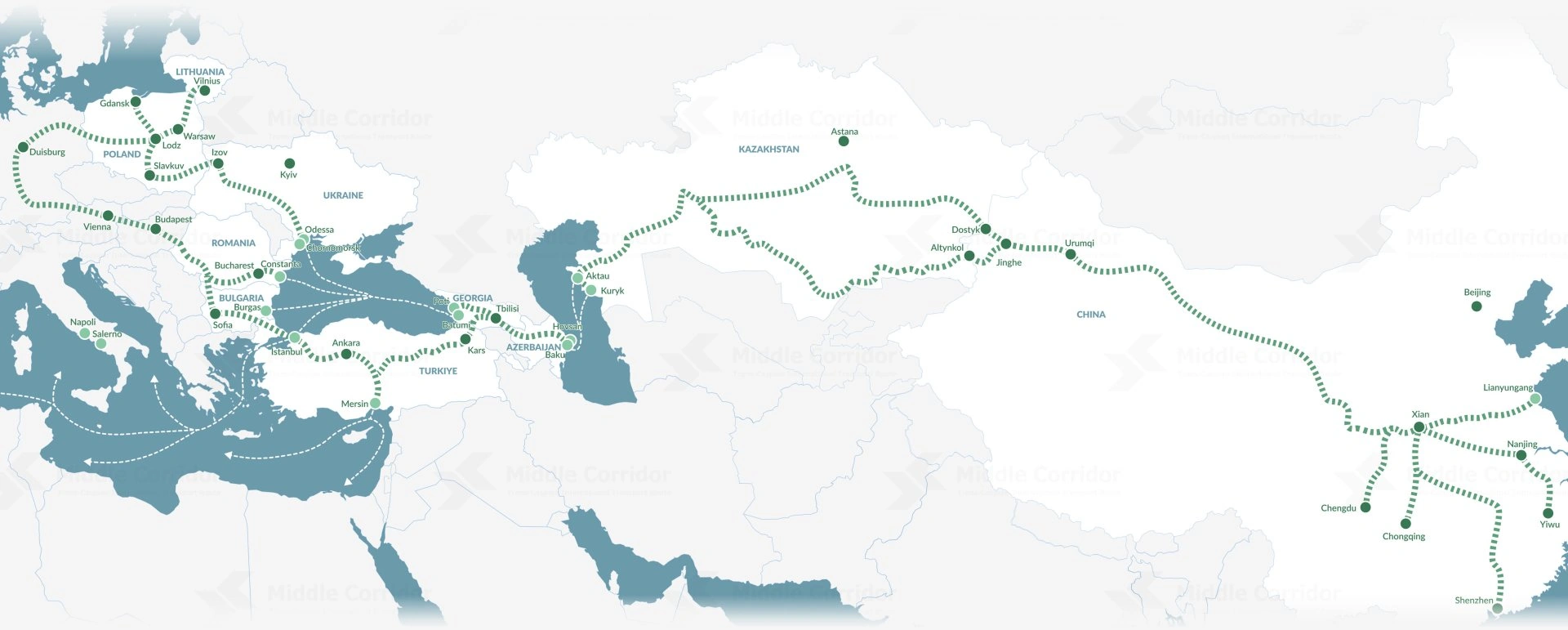
development of the Middle Corridor.
"The first obstacle relates to the availability of vessels in
the Caspian Sea. The capacity of ferries and Ro-Ro vessels is
limited, and many vessels depart only after being fully loaded,
rather than on a fixed schedule. In addition, storms can halt
traffic for several days,” he said.
Poladov cited the situation at the port of Aktau in December and
January of last year as an example.
"Over the course of 60 days, the port was operational for only
about 10 to 15 days. Because of this, freight forwarders can
guarantee their customers rail transit times down to the day,
whereas sea transit times can only be predicted with an accuracy of
one week. When there are delays at the port, railcars and
containers are also forced to sit idle, which leads to additional
delays at other stages of transport,” he noted.
The second obstacle, according to Poladov, is the congestion at
transshipment points. Delays can occur at every transshipment point
between sea, rail, and road transport, as well as when crossing
borders.
The situation is complicated by limited capacity at berths,
storage yards, and the railcar fleet during periods of peak demand.
In addition, when transporting goods to Türkiye, it is necessary to
account for the change in rail gauge from 1,520 to 1,435
millimeters.
Another problem is the imbalance in cargo flows and the need to
transport empty containers back in the opposite direction.
As Poladov noted, containers arriving from the Far East to
Azerbaijan and Europe are often used only to transport cargo in one
direction.
“Freight forwarders or carriers have to bear the costs of
purchasing them, and after delivering the cargo, they have to look
for opportunities to sell or further utilize the containers,” he
explained.
The third obstacle, as Poladov pointed out, is the lack of
integration between the information systems and procedures of the
countries involved in the transport.
“Each country has its own rail operator, its own documents, and
its own rates. Often, two identical shipments arrive several days
apart, and the reason lies not with the railroad but with the
documentation,” he noted.
According to him, customers are also unable to track their cargo
along the entire route.
“Freight forwarders can track containers, for example, in China
or Kazakhstan, but they cannot always determine exactly when a
container will depart from Aktau, arrive in Alat, leave Alat, and
continue to Georgia or Türkiye,” Poladov said.
At the same time, he noted that work is already underway to
resolve these issues.
According to him, small container feeder vessels operate on the
Caspian Sea alongside Ro-Ro ships and ferries. In addition, larger
feeder vessels are under construction and are expected to enter
service next year.
Poladov also reported that the capacity of the Baku-Tbilisi-Kars
railway has been increased to 5 million metric tons, and that the
port of Alat is being expanded.
He emphasized that the next step is to ensure the coordinated
operation of infrastructure and information systems so that
customers can view the Middle Corridor as a single route rather
than a collection of separate systems.
Meanwhile, the EU-Azerbaijan Business Forum is taking place in
Baku, marking the 30th anniversary of the partnership between the
European Union and Azerbaijan, as well as the 10th anniversary of
the forum. This year’s event is being held under the theme
“Bridging Corridors: Connectivity & Infrastructure.”
The main focus is on developing transport connectivity and
infrastructure, strengthening economic cooperation between the EU
and Azerbaijan, and expanding regional trade and investment.
The forum’s program includes high-level discussions, thematic
sessions, and business meetings involving representatives from the
public and private sectors.