BAKU, Azerbaijan, August 5. Uzbekistan and the
United States reaffirmed their commitment to strengthening their
strategic partnership.
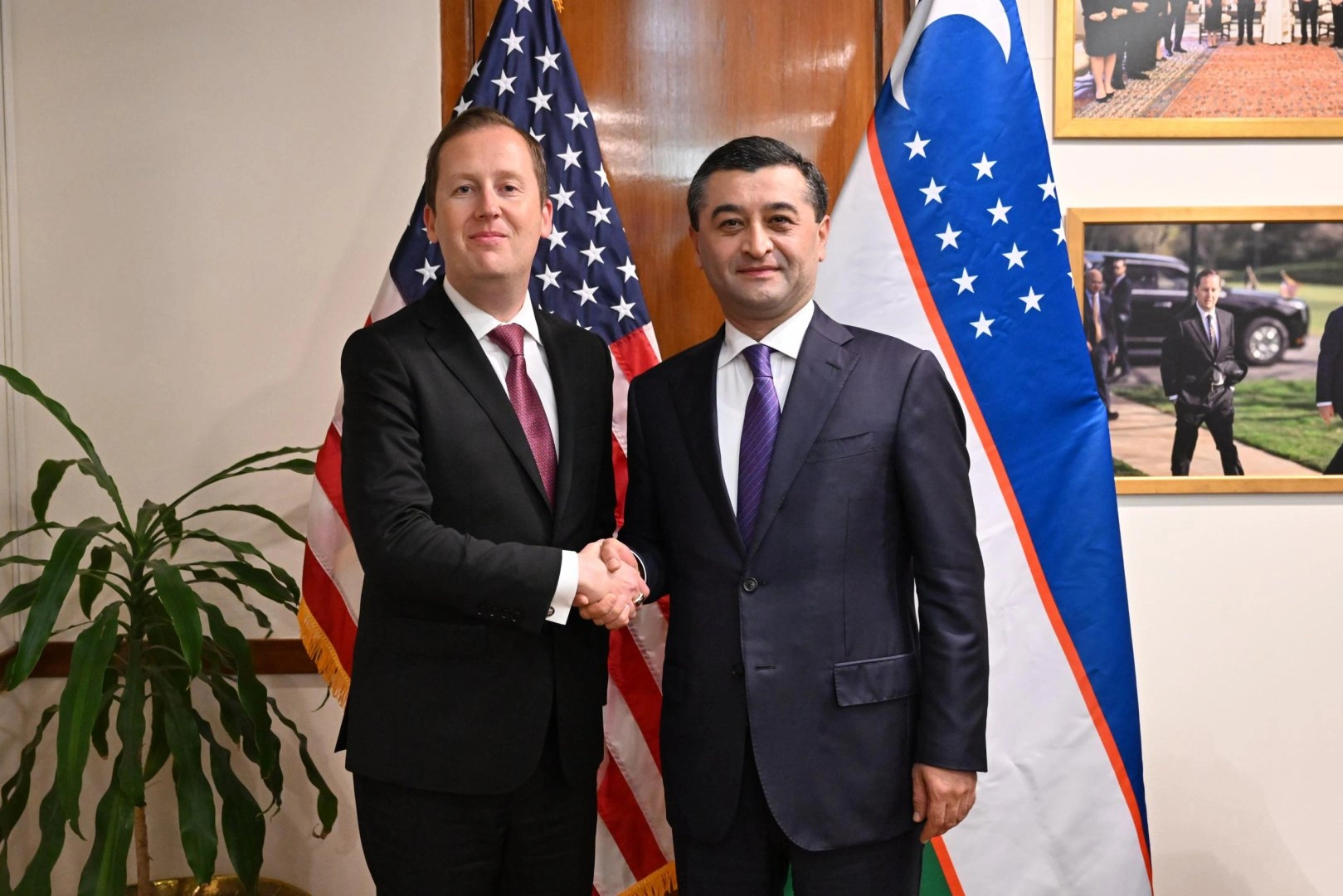
This was reflected in the statement by the Uzbek Foreign
Minister Bakhtiyor Saidov following talks with U.S. Special
Presidential Envoy for South and Central Asia Sergio Gor in New
Delhi.
The meeting focused on expanding bilateral cooperation and
maintaining high-level political dialogue as the two countries
continue to deepen engagement across a range of strategic
areas.
"We particularly noted the steady development of the strategic
partnership between Uzbekistan and the United States across all
areas," Saidov said following the meeting.
The sides reviewed prospects for further intensifying dialogue
at the highest political levels and discussed priority areas of
bilateral cooperation, although specific initiatives were not
disclosed.
In addition to bilateral issues, the two sides exchanged views
on cooperation within the C5+1 framework, which brings together the
United States and the five Central Asian countries to advance
collaboration on regional security, economic development, climate
resilience and connectivity.
The discussions also covered preparations for upcoming joint
events and consultations, as well as key regional and international
developments. According to the Uzbek side, the meeting underscored
both countries' interest in maintaining close coordination on
issues affecting Central Asia and promoting broader regional
cooperation.
The talks took place as Uzbekistan continues to pursue a
multi-vector foreign policy aimed at expanding strategic
partnerships with major international partners while promoting
regional stability, trade and investment.
At the conclusion of the meeting, the two sides agreed to
continue an open and trust-based dialogue and to further expand
practical cooperation. The discussions reflected the growing
importance of U.S.-Uzbek relations as both countries seek to
strengthen political engagement and broaden cooperation through
bilateral mechanisms and the C5+1 platform.