BAKU, Azerbaijan, August 21. Kazakhstan has
received another batch of high-yield breeding cattle from Germany
as part of the country's Comprehensive Livestock Development Plan,
the Kazakh Ministry of Agriculture said.
"Since the beginning of the year, domestic livestock producers
have purchased more than 30,000 head of breeding cattle, including
over 3,500 imported from non-CIS countries. The work continues,"
said Baglan Aimurzayev, Director of the Livestock Development
Department at the Ministry of Agriculture.
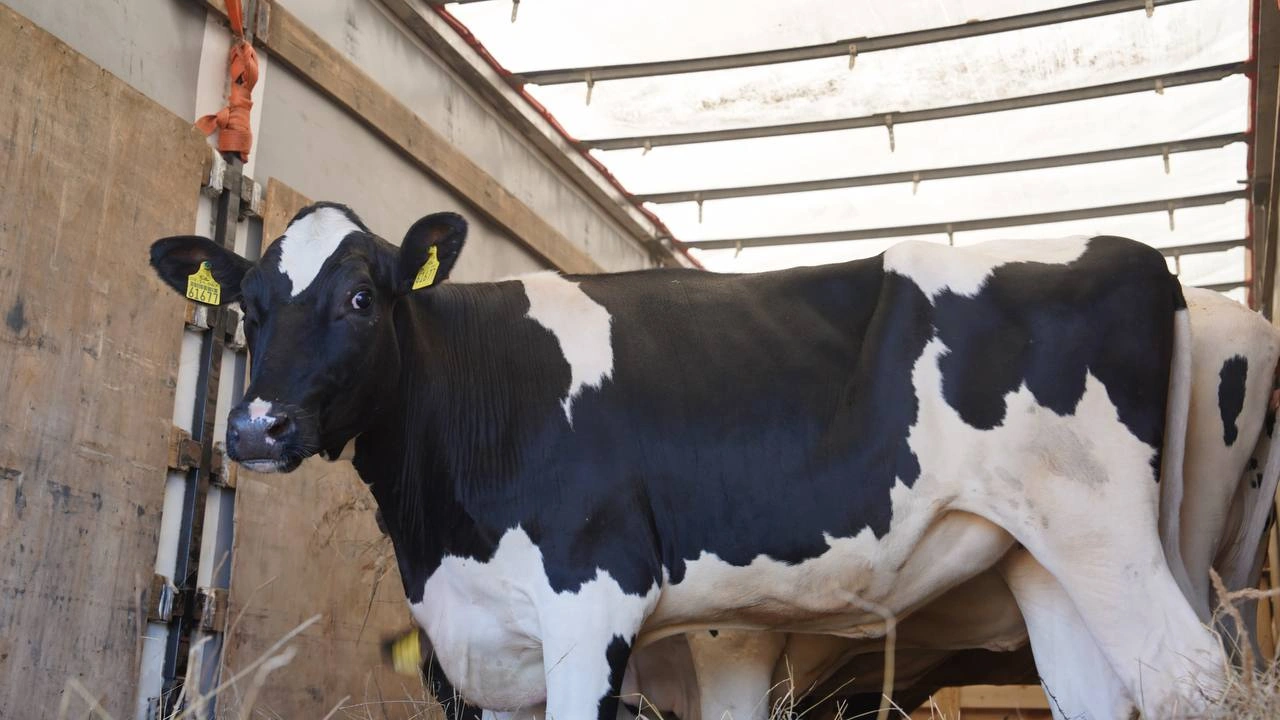
The latest batch arrived in Kazakhstan on August 21. The
imported Holstein heifers are intended to stock a new dairy farm
operated by DK Maqsat KZ LLP in the Kostanay region.
Following veterinary and customs clearance, the cattle will be
transported by specialized vehicles to Vladimirovka village, where
they will undergo mandatory quarantine.
The DK Maqsat KZ project provides for the establishment of a
dairy farm with 400 milking cows, with total investment estimated
at 3.2 billion tenge (about $11.8 million).
The project is being implemented as part of a program to
replicate the experience of Kazakhstan's North Kazakhstan region.
The farm is equipped with modern automated systems, including a
milking unit designed to milk 40 cows simultaneously and a
parallel-type milking system.
An Afimilk herd management and monitoring system will also be
used to track livestock numbers, animal activity and production
performance through individual pedometers.
The company plans to gradually import the remaining cattle by
the end of 2026 and bring the farm to its designed capacity of 400
head.
In the Kostanay region, 13 investment projects for the
construction and development of dairy farms are scheduled to be
implemented in 2023-2026, with total financing of 39.2 billion
tenge (about $144.9 million). Seven modern dairy farms with a
combined annual production capacity of 46,000 tonnes of milk have
already been commissioned.
Nationwide, 97 projects for the construction and modernization
of dairy farms have been financed under the program, with a
combined designed capacity of 559,600 tonnes of milk per year. Of
these, 71 farms have already been commissioned, while 26 projects
remain under implementation.
The ministry noted that increasing imports and domestic
purchases of breeding cattle is one of the measures aimed at
improving the genetic potential of Kazakhstan's livestock sector
and increasing dairy herd productivity.