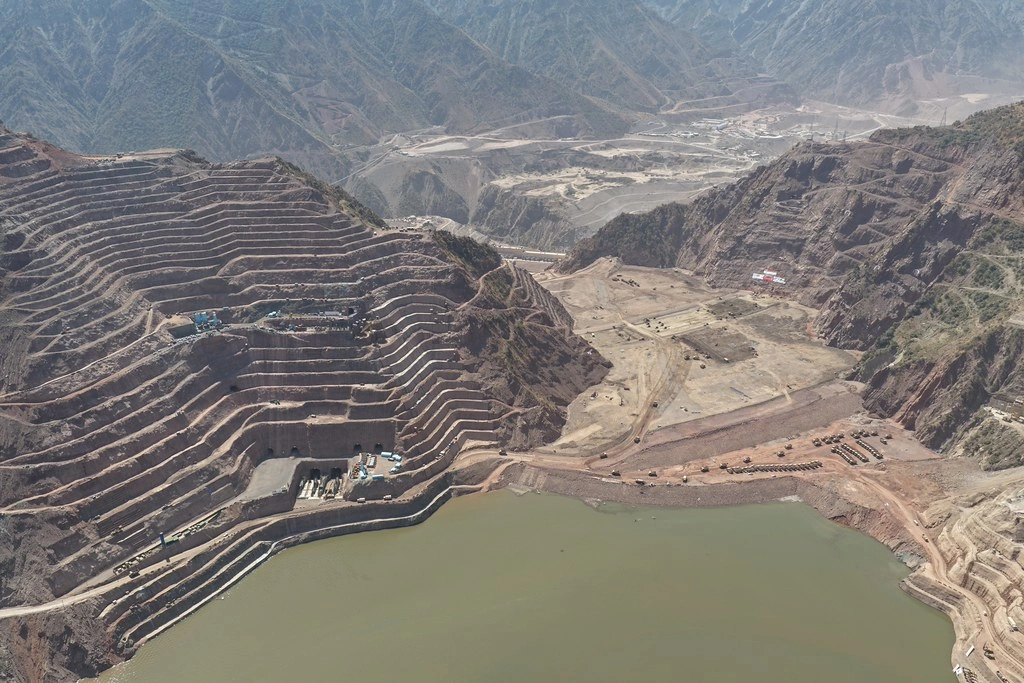
BAKU, Azerbaijan, August 20. Rogun HPP in
Tajikistan strengthens system for controlling and regulating water
discharge flows.
According to the press service of the Tajik President, this
information was announced as President of Tajikistan Emomali Rahmon
reviewed the progress of construction works at the main intake of
the Rogun Hydropower Plant.
"The stilling basin is designed to receive high-velocity water
flows from construction and spillway tunnels, reduce flow energy
and create safe conditions for discharging water into the Vakhsh
River channel," the statement said.
According to the project, the main part of the basin will be
excavated to an elevation of 945 meters. The reinforcement of the
right bank is designed to withstand a maximum water discharge of up
to 1,750 cubic meters per second.
Hydraulic calculations envisage using the basin as a structure
for dissipating flow energy and controlling erosion, which is
expected to reduce the impact of powerful water flows and ensure
the stability of the riverbanks.
Rahmon instructed officials to pay particular attention during
further works to construction quality, slope stability, bank
reinforcement and the safety of structures in the lower section of
the hydropower plant.
Meanwhile, the Rogun Hydropower Plant is being constructed on
the Vakhsh River in eastern Tajikistan and is designed to have a
total installed capacity of 3,780 MW. The project includes a major
dam, underground power facilities, water conveyance and spillway
tunnels, as well as a network of supporting hydraulic
infrastructure.
The plant's construction involves extensive underground and
hydraulic works designed to manage large water flows and ensure the
stability and safety of the facility. Once fully commissioned,
Rogun HPP is expected to significantly increase Tajikistan's
electricity generation capacity and strengthen the reliability of
its domestic power supply.