Swedes will head to the polls on September 13 to elect members of the Nordic country's parliament, the Riksdag, who will determine whether Prime Minister Ulf Kristersson remains in office. This election could mark the first time the anti-immigration party formally enters a governing coalition, as recent polls have placed the SD in second place nationally, with previous announcements by the ruling bloc members promising a place for them.
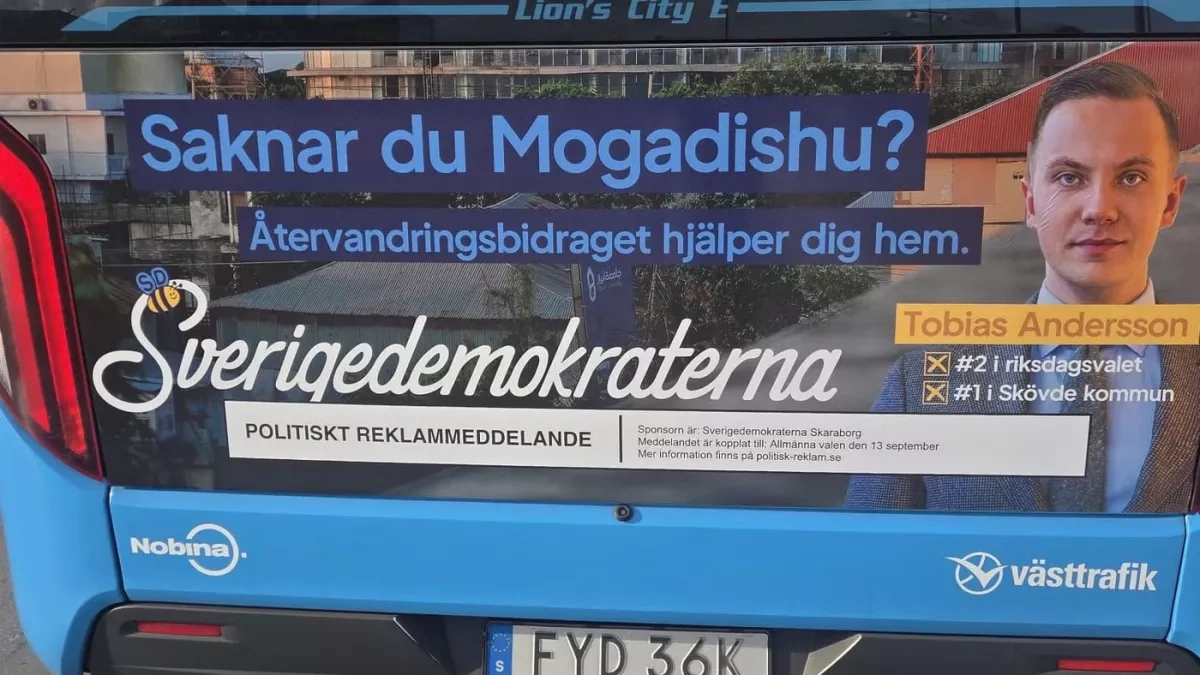
SD campaign posters displayed across Swedish cities have focused heavily on immigration and have drawn criticism for what opponents describe as xenophobic messaging. Dozens of posters appeared at Stockholm's Central Station during a weeks-long campaign, as an article by Al Jazeera highlights.
Some read, “Do you miss Mogadishu? The repatriation grant will help you get home,” referring to Sweden's large Somali diaspora. Others warned: “If you commit crimes, live off benefits, don’t learn Swedish or misbehave, you’re not welcome.”
The repatriation grant dates back to an initiative introduced by a Social Democratic government in the 1980s that offered refugees around $1,000 to resettle in their countries of origin. This year, the centre-right government, working with the SD, increased the grant to approximately $36,000 per adult.
Public transport operator Västtrafik removed the posters following protests, saying its drivers had faced concerns about harassment and citing risks to the working environment and potential vandalism.
Zina al-Dewany, a political commentator and editorial writer for Swedish newspaper Aftonbladet, told Al Jazeera that the campaign was designed to shock.
SD often runs campaigns designed to “provoke a bit too much”, but when they are forced to take them down, the party says it is the “victim”, she said.
Following the removal of the campaign, SD lawmaker Tobias Andersson issued a statement accusing the transport operator of censorship and “election sabotage”.
SD's mounting rise
For decades, Sweden's political establishment treated the SD as a political pariah, much as many mainstream parties across post-World War II Europe isolated far-right movements.
Following the 2018 general election, however, political deadlock prompted Sweden's right-wing parties to reconsider their approach to the SD.
In the years that followed, the SD held talks with the Christian Democrats and the Moderate Party. In October 2022, the Liberals also opened the door to cooperation with the party.
The previous election produced a narrow majority for a four-party right-wing bloc that included the far-right Sweden Democrats (SD). However, the governing coalition ultimately consisted of only three parties, with the SD providing parliamentary support from outside the government.
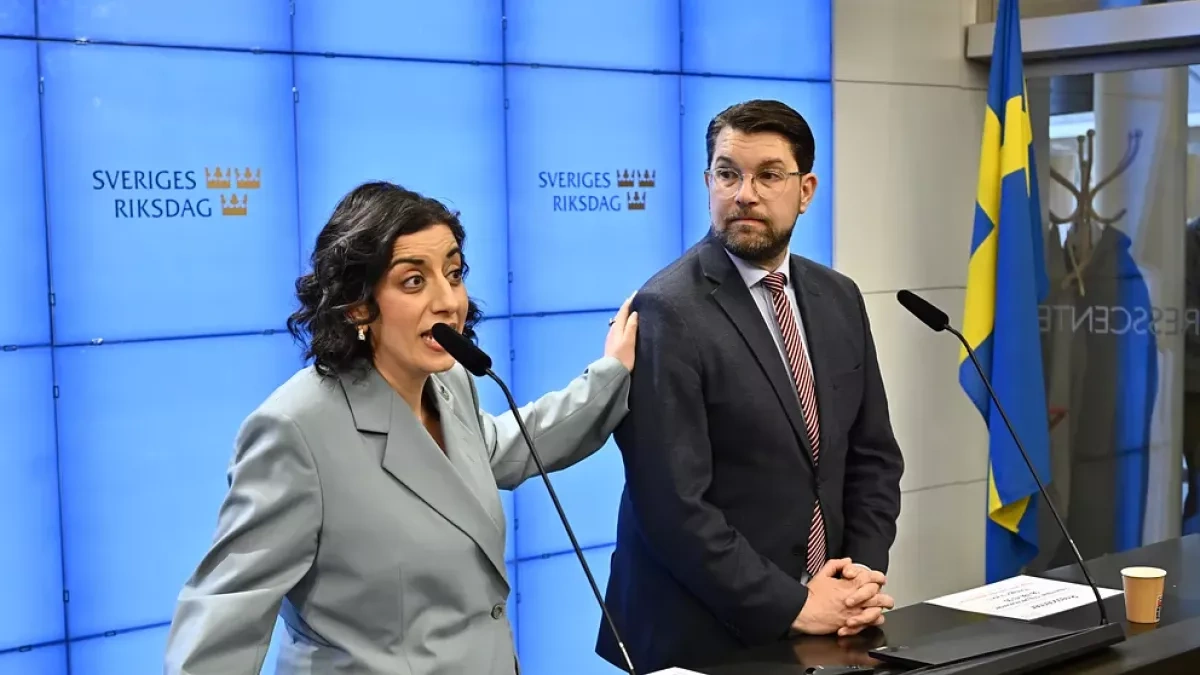
In April 2026, another political barrier was broken when Kristersson pledged to allow the SD to enter government for the first time if his coalition won the next election. In May, Liberal leader Simona Mohamsson, the country's education and integration minister, announced that her party would likewise allow the SD to participate in a future government.
The decision was particularly notable given Mohamsson's background and her history of anti-racism activism. Born in Germany to a Palestinian father and a Lebanese mother, she has been a prominent advocate on anti-racism issues. Following her announcement, SD leader Jimmie Åkesson offered her a handshake, which she accepted in an embrace, a moment that sent political shockwaves through Sweden.
According to an opinion poll released this week, Sweden's ruling right-wing bloc has narrowed the gap with the centre-left opposition. Earlier surveys had pointed to a likely victory for the opposition, led by Social Democrats leader Magdalena Andersson, but the latest figures suggest Kristersson's government could still retain power.
Support for the four centre-left parties stood at 50.6 per cent in a Demoskop survey conducted for Swedish newspapers Aftonbladet and Svenska Dagbladet. The three-party government, together with its parliamentary support party of the SD, had 47.3 per cent.
By Nazrin Sadigova