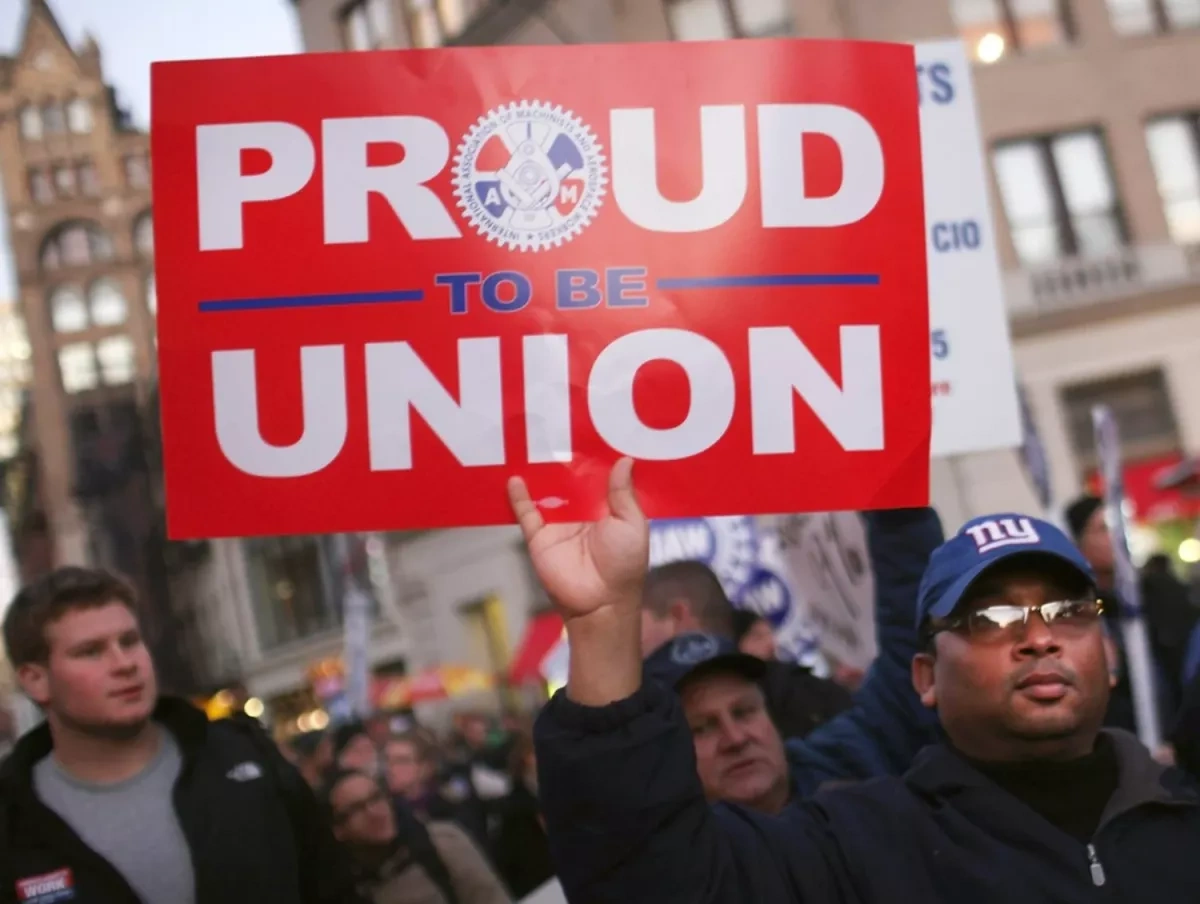
At a time when Americans remain deeply divided on many issues from political to social matters, labour unions have gained support across nearly every age group, regardless of political affiliation or educational background.
Nearly half of Americans, or 47 per cent, want labour unions in the United States to have more influence than they do today, the highest level recorded in the past quarter century and roughly twice the 23 per cent who want unions to have less influence.
Another 26 per cent would prefer their influence to remain unchanged, according to the latest Gallup survey, published just days ahead of the American Labour Day holiday.
Despite growing public support, however, union membership remains near a modern low. Congress has repeatedly blocked some of organised labour’s key priorities, while House Republicans are investigating unions even as Republican voters themselves generally express support for organised labour.
The share of Americans who want unions to have greater influence has risen four percentage points since 2023, following an almost continuous increase from a record-low 25 per cent in 2009. Over the same period, the share wanting unions to have less influence has fallen from 42 per cent to a record-low 23 per cent.
The latest figures represent a sharp reversal from the aftermath of the Great Recession. In 2009, union approval fell to 48 per cent, while 42 per cent of Americans wanted unions to have less influence and only 25 per cent wanted them to have more.
US media outlet Axios noted that Americans are increasingly embracing unions at a time when relatively few workers actually belong to one.
Only 11 per cent of US workers — about 16.5 million people — were represented by unions in 2025, compared with 23 per cent, or 20.5 million workers, in 1983, the first year for which comparable Bureau of Labour Statistics data are available. In the most recent figures, fewer than 7 per cent of private-sector workers were represented by unions.
Americans also remain sceptical that the current favourable attitudes will translate into greater union strength. Only 27 per cent expect unions to become stronger, while 39 per cent believe they will weaken and 29 per cent anticipate little change, according to Gallup.
The issue of unions appears to offer some common ground between America's two major political parties. Democrats and Republicans across nearly every generation express generally positive attitudes toward organised labour, according to analysis by the Centre for American Progress.
The analysis found that self-identified Democrats tend to rate unions more favourably than Republicans on average. However, Republicans in every generation except Baby Boomers express positive opinions of unions on average. Even among Republican Baby Boomers, the average rating falls only slightly below 50, the level corresponding to a neutral position or “no feeling at all.”
By Nazrin Sadigova