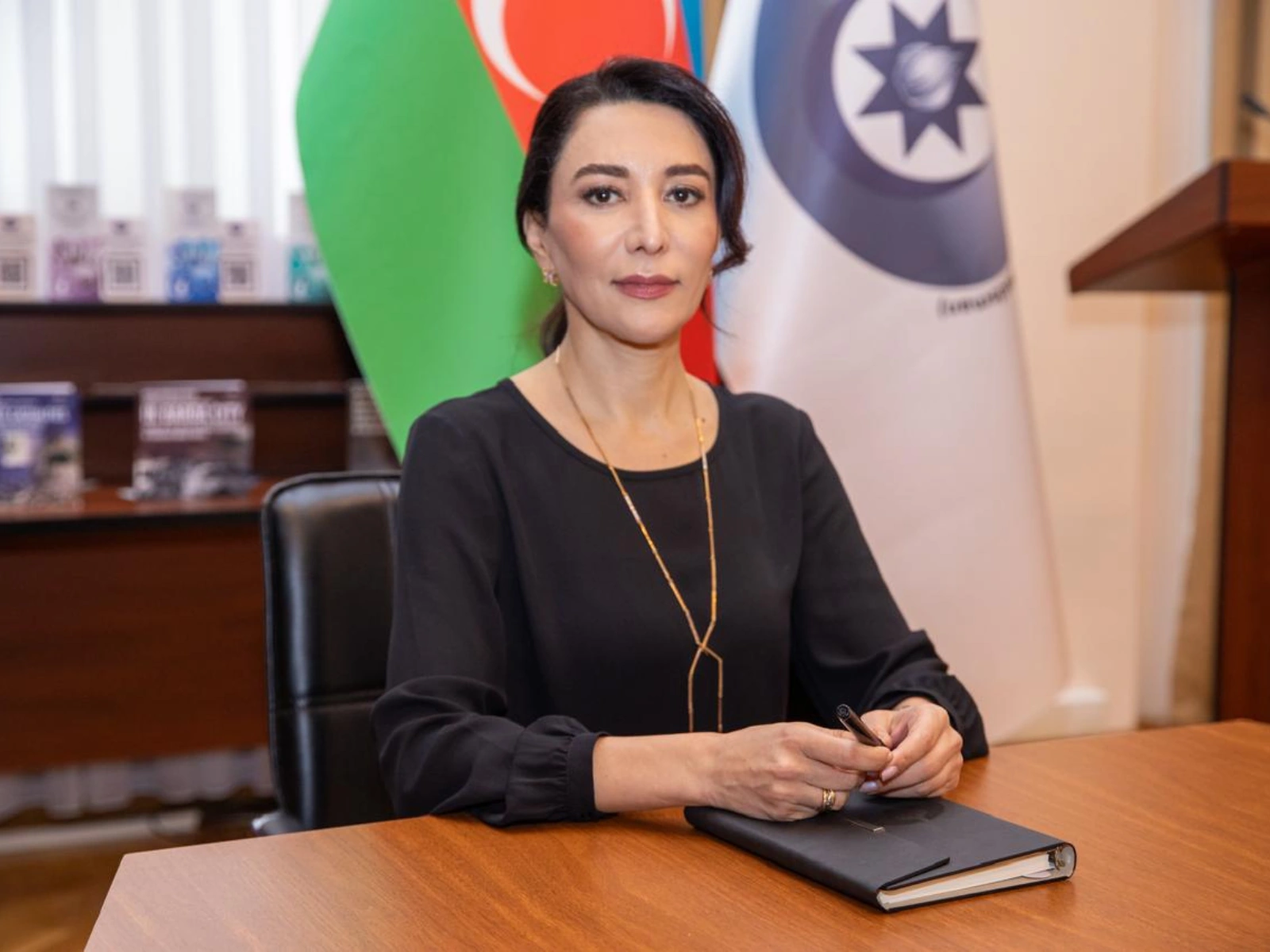
BAKU, Azerbaijan, September 5. Sabina Aliyeva,
the Human Rights Commissioner of the Republic of Azerbaijan
(Ombudsman), expressed her opinion regarding the unfounded
accusations made by an Armenian human rights activist.
This was reported by the press service of the Ombudsman’s
Office.
Meanwhile, it was stated that the Ombudsman considers the claims
made at a press conference in the Republic of Armenia on September
4, 2026—that individuals of Armenian origin, convicted of crimes
they committed, are subjected to discrimination in Azerbaijan on
the basis of religious affiliation, torture, the destruction of
Christian religious symbols, denial of access to the Bible, and
coercion to read the Quran, and views them as an attempt to derail
the ongoing peace talks.
The statement emphasized that presenting such serious
allegations to the public as facts without providing any credible
evidence is incompatible with the principles of human rights
protection. In particular, attempts to link issues concerning
individual persons to religious affiliation and to elevate them to
the level of a Christian-Muslim conflict are unacceptable.
“Azerbaijan is a multinational and multi-confessional secular
state. In the country, the rights and freedoms of individuals
belonging to various religious denominations are guaranteed on an
equal footing, and their freedom of religion is respected.”
It is unacceptable to link criminal liability established by a
court to a person’s ethnic origin and to portray the punishment
that these individuals have incurred on lawful grounds for their
actions as “ethnic or religious persecution.” Criminal liability is
determined not by a person’s ethnicity or religious beliefs, but by
the nature of the act committed, the evidence gathered regarding
that act, and the court’s legal assessment,” the statement
reads.
In addition, it was noted that during monitoring and visits
conducted by the Ombudsman’s National Preventive Group at various
times, confidential meetings were held with individuals of Armenian
origin who were detained on the territory of Azerbaijan; their
medical and psychological condition was assessed; and their rights
and freedoms, as enshrined in international documents, were
explained to them in their native languages. The monitoring
revealed that the rights and freedoms of these individuals are
guaranteed at a level consistent with international standards,
without discrimination, and that they have access to medical care
and other necessary services.
In this regard, the ombudsman particularly emphasizes the need
to distinguish between human rights advocacy and statements made
for political purposes, as well as confrontational rhetoric. Making
serious accusations such as “torture,” “religious persecution,” and
discrimination based on religious affiliation without relying on
verified facts misleads public opinion, derails peace negotiations,
and fuels religious conflict.
Such irresponsible approaches are particularly alarming against
the backdrop of the ongoing peace process between Azerbaijan and
Armenia. Lasting peace is possible not only through political and
legal agreements, but also by building trust between societies and
avoiding rhetoric of intolerance and hatred. The dissemination of
unverified information based on religious grounds deepens mistrust
between societies and undermines the environment necessary for
peace and reconciliation.
The protection of human rights precludes the distortion of facts
for political purposes and the creation of an “enemy” image based
on religious affiliation. Those working in this field must be
responsible in their statements, rely on objective and verified
facts, and avoid rhetoric that could undermine peace and mutual
trust,” the statement reads.