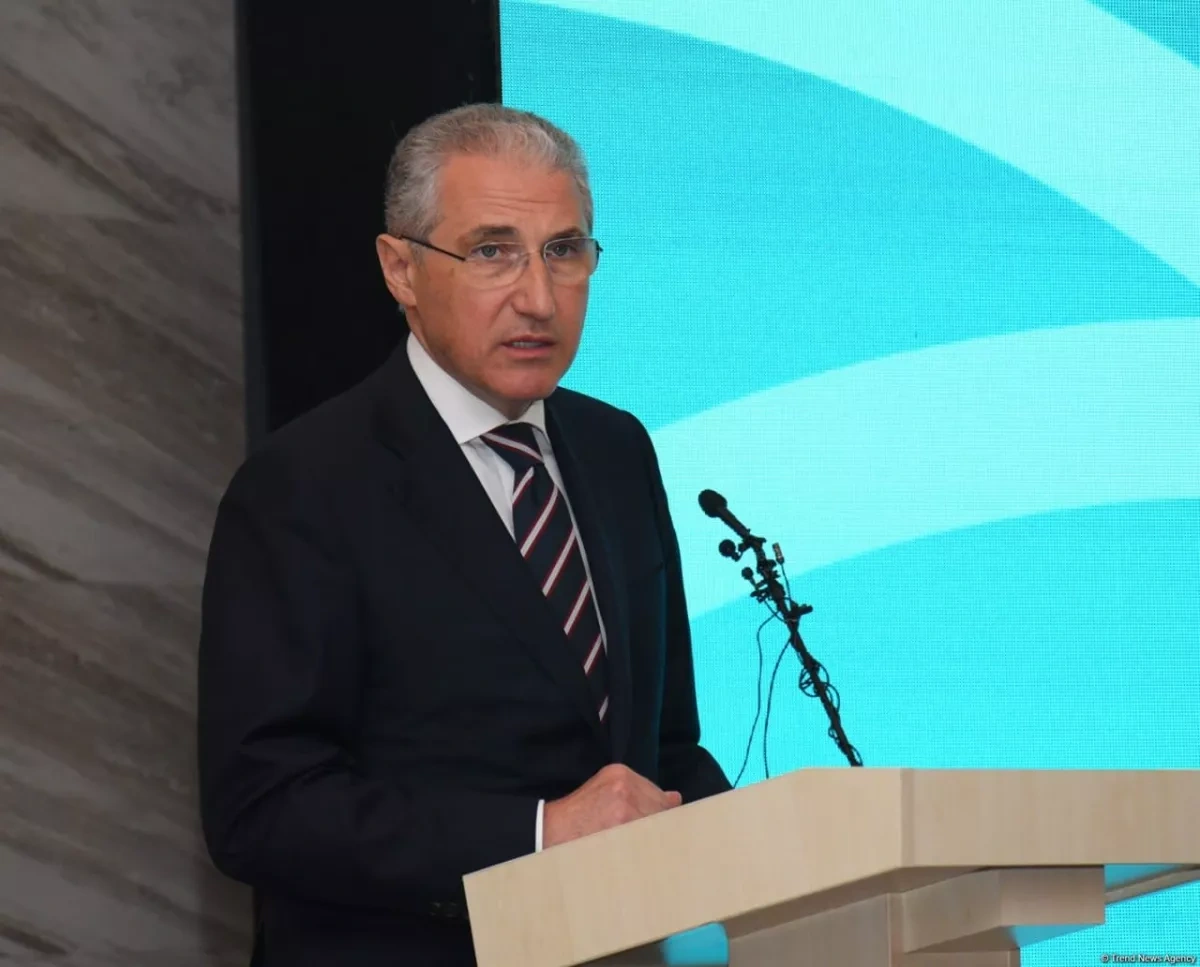
Around 2,500 participants are attending Baku Climate Action Week 2026 (BCAW 2026), Azerbaijani Presidential Representative for Climate Issues Mukhtar Babayev said at the event's opening on September 7.
Babayev highlighted the significance of holding the two climate events in parallel, stressing that the format reflects Azerbaijan’s continued commitment to advancing the outcomes of COP29, Caliber.Az reports.
“About 2,500 participants are taking part in the fourth Climate Week of the UN Framework Convention on Climate Change (CW4), as well as Baku Climate Week. Their parallel organisation is no coincidence. It reflects the continuity of Azerbaijan’s climate policy and our commitment to advancing the momentum of COP29: from negotiations to implementation and from commitments to practical action,” Babayev noted.
He noted that recent assessments warn that exceeding the 1.5-degree warming threshold is becoming increasingly inevitable, while emphasising that every fraction of a degree matters.
“Heatwaves, droughts, floods, wildfires, water shortages, and growing pressure on food systems, healthcare and infrastructure are no longer something people encounter only through scientific reports and forecasts of the future. We see it, we feel it, and we are increasingly paying the price for it. For the most vulnerable countries, particularly small island developing states and least developed countries, the stakes are even higher. A single disaster can destroy homes, infrastructure and the gains of decades of development within hours,” he stressed.
According to the minister, ahead of COP31, an Azerbaijani delegation will visit Tuvalu and several other Pacific islands as part of the Pre-COP process to hear directly about their realities and priorities.
“For them, adaptation is a matter of protecting the lives, livelihoods and future of entire communities. Recent natural disasters affecting communities in Nepal and China, as well as other parts of the world, once again remind us of the growing human and economic costs of extreme weather events,” Babaev said.
He noted that nearly 12,000 weather-, climate- and water-related disasters over the past decades have claimed more than 2 million lives and caused economic losses exceeding $4.3 trillion.
Against this backdrop, Babaev said developing countries will need more than $300 billion annually for adaptation by 2035, while international financial flows remain only a small fraction of what is required. At the same time, global military spending is approaching $3 trillion a year, although every dollar invested in resilient infrastructure can generate around $4 in benefits.
By Jeyhun Aghazada