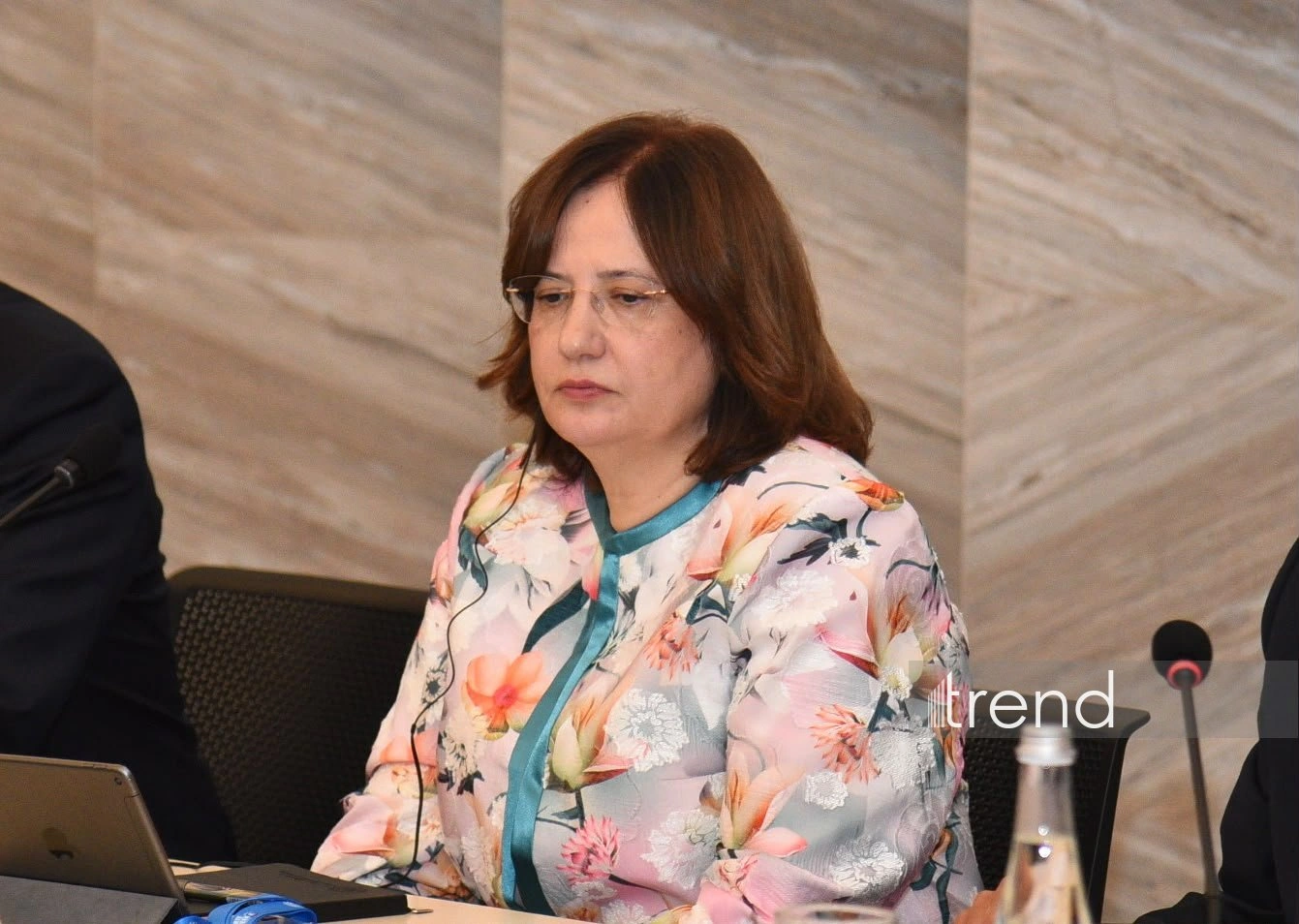
BAKU, Azerbaijan, September 7. Türkiye will
increase the electrification rate to 35% by 2035, the country's
Deputy Minister of Environment, Urbanization and Climate Change,
CEO of COP31, Fatma Varank, said during the Baku Climate Action
Week 2026 (BCAW 2026), Trend's correspondent reports from the event.
According to her, most of the issues discussed during the
climate weeks are subsequently reflected in the COP agenda, and
these platforms contribute to further accelerating global climate
action.
"I really congratulate Climate Week. Because climate weeks are
very important platforms. Many of the issues discussed during an
effective climate week are already cooked in the kitchen at the COP
and then presented at the COP. The agendas here, especially the
discussions, meetings, and contributions on the action agenda,
contribute to a more active implementation of the action agenda,"
Varank noted.
She pointed out that at COP28, global targets were set to triple
renewable energy capacity by 2030 and double the rate of energy
efficiency improvement.
"All countries have implemented regulations that will bring them
closer to these targets. Turkey is one of these countries. We have
worked intensively with the private sector to achieve this target,
including by implementing all necessary legal regulations," the CEO
of COP31 emphasized.
Moreover, Varank stated that the initiatives of the Azerbaijani
chairmanship at COP29 on energy networks and energy storage systems
have also aroused significant interest, and the relevant work has
continued.
"Now, at the meeting to be held in Antalya at COP31, one of the
main directions of our agenda has been determined as
electrification. The goal of achieving the 35 percent target,
called '35 by 35' on a global scale for 2035, has been set, and
this was announced in Bonn in June," she also said.
According to her, a more detailed report on this target will be
presented in New York. Within the framework of this process, the
conditions under which various sectors will achieve the
electrification target will also be determined.
" Electrification is a very broad concept. It is also important
under what conditions countries will achieve the electrification
goal while achieving this goal," Varank noted.
The CEO of COP31 emphasized the importance of developing
countries developing financial and technical mechanisms to support
them in achieving this goal.
"We are working on a mechanism called 'Bridge' that will
facilitate access to finance for developing countries. We'll
announce its first applications in New York as a pilot project in
six countries. Most likely, electrification will be the main
direction here," she said.
Varank noted that developing countries should not be left behind
when setting a global electrification target.
"A number of developing countries, including the least developed
island states and African countries, need financial and technical
support to achieve these goals. As the COP presidency, we will also
bring this matter to the COP31 agenda as a package," she
stressed.
She further said that the main focus on electrification will be
on areas such as industry, transport, energy efficiency in
buildings, and electrification in buildings.
"As Türkiye, our current electrification level is 22 percent.
We'll do several things, like other developing countries, to
increase this to 35%," Varank added.
The fourth Climate Week (CW4) of the UN Framework Convention on
Climate Change is being held in Baku through September 11, hosted
by the Republic of Azerbaijan and organized by the Azerbaijani
Ministry of Foreign Affairs.
Baku, which has become an important international platform for
the climate agenda, is hosting discussions on the practical
implementation of climate decisions, the expansion of international
cooperation, and further strengthening global climate action ahead
of COP31.
Representatives of governments and international organizations,
experts, financial institutions, the private sector, and civil
society from various countries are expected to attend the
events.
Baku Climate Week is designed as an international platform for
discussions on combating climate change, the energy transition,
renewable energy, sustainable development, and accelerating climate
action.
The events will further strengthen Baku’s active role in the
global climate agenda and make an important contribution to
strengthening international climate cooperation ahead of COP31.