BAKU, Azerbaijan, September 7. Approximately
90% of projects submitted for buildings requiring energy efficiency
and thermal protection meet the relevant requirements in
Azerbaijan, chief specialist of the Ministry of Emergency
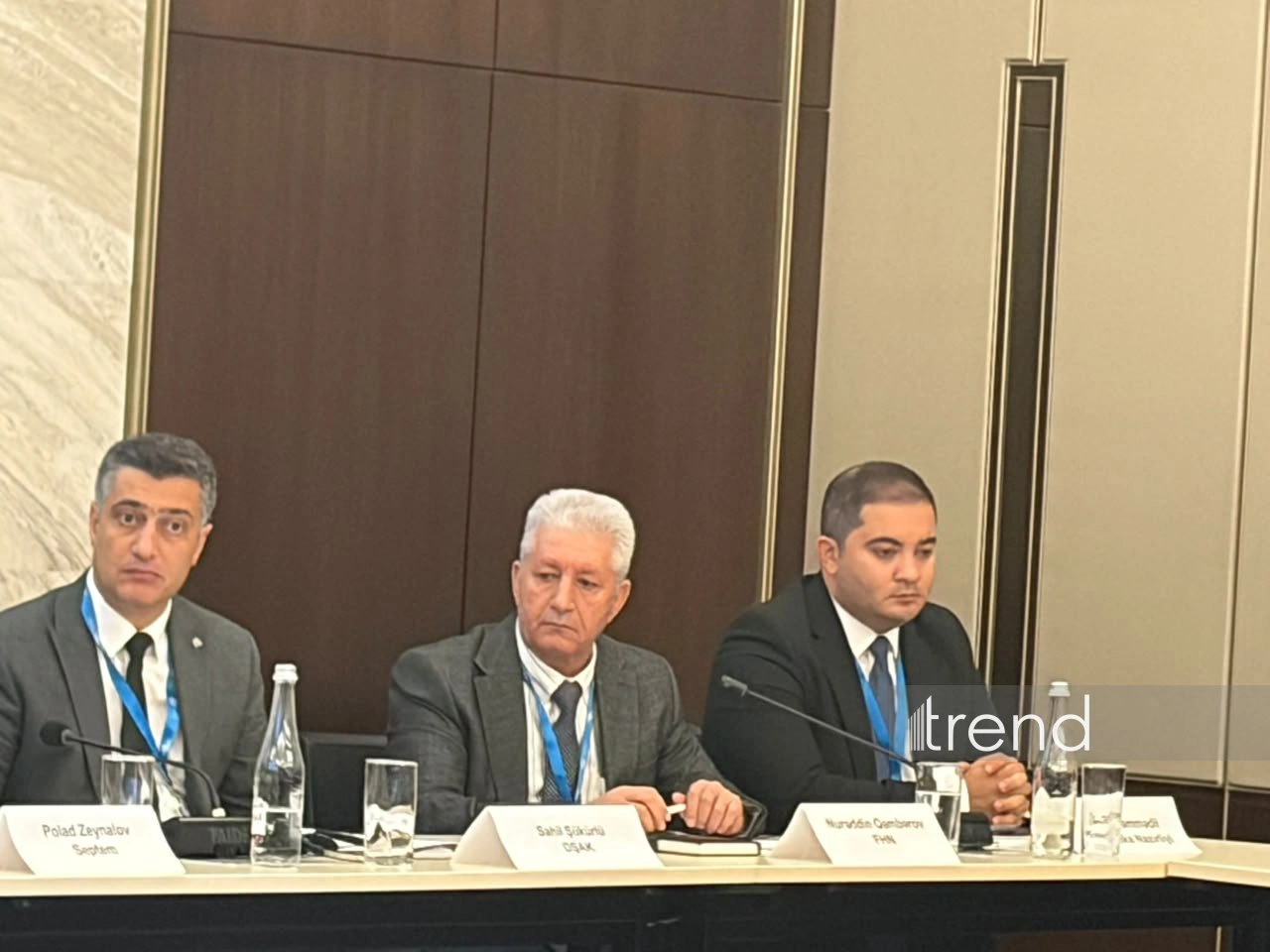
Situations, Nuraddin Gambarov, said during a roundtable titled
"Building Energy Performance Certification and Digital Building
Passports" within the framework of the Baku Climate Action Week
2026 (BCAW 2026), Trend's correspondent reports from the event.
He noted that five main directions are of particular importance
in ensuring the energy efficiency of buildings.
"The main requirements include meeting thermal insulation
standards for building walls and structures, keeping heat
consumption within limits, complying with energy efficiency
standards, and protecting structures from air leaks and moisture.
Today, in almost 90% of the projects submitted for buildings
requiring energy efficiency and thermal protection by the norm,
these requirements are met by the Ministry of Emergency
Situations," Gambarov explained.
The ministry official noted that in order to reduce carbon
emissions in projects, the use of ventilation and heating systems,
regulators, recuperators, as well as LED lamps is strictly checked
and the fulfillment of the relevant requirements is ensured.
According to him, LED lamps are mainly used for lighting in
projects and construction works carried out in Aghdam.
Gambarov added that energy efficiency requirements are not
limited to the design stage alone. The implementation of energy
efficiency measures envisaged in the project is monitored during
construction and at the stage of handover of facilities.
He also said that in accordance with the Green Energy Zone
concept, the installation of solar panels and solar collectors in
the liberated territories is being taken into account. Even in
projects where this equipment is not installed immediately,
technical solutions are required to be provided that will allow for
their installation in the future.
"We demand that the construction of roofs be designed in such a
way that it is possible to install solar panels and collectors in
the future," the official emphasized.
The fourth Climate Week (CW4) of the UN Framework Convention on
Climate Change is being held in Baku through September 11, hosted
by the Republic of Azerbaijan and organized by the Azerbaijani
Ministry of Foreign Affairs.
Baku, which has become an important international platform for
the climate agenda, is hosting discussions on the practical
implementation of climate decisions, the expansion of international
cooperation, and further strengthening global climate action ahead
of COP31.
Representatives of governments and international organizations,
experts, financial institutions, the private sector, and civil
society from various countries are expected to attend the
events.
Baku Climate Week is designed as an international platform for
discussions on combating climate change, the energy transition,
renewable energy, sustainable development, and accelerating climate
action.
The events will further strengthen Baku’s active role in the
global climate agenda and make an important contribution to
strengthening international climate cooperation ahead of COP31.