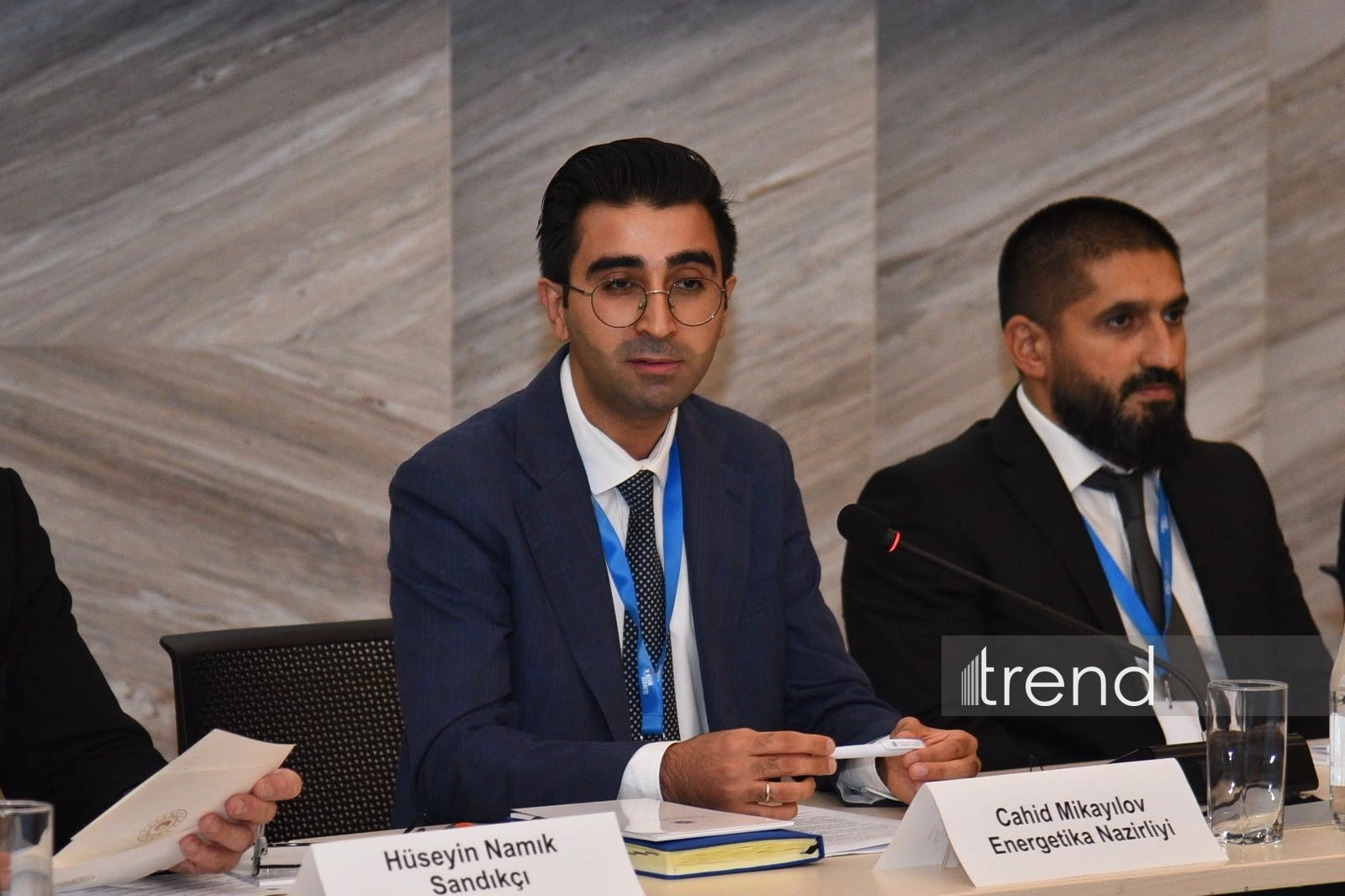
BAKU, Azerbaijan, September 7. Energy
efficiency certification for existing buildings may become
mandatory in the future, Jahid Mikayilov, the Head of the Energy
Efficiency Department at the Ministry of Energy of the Republic of
Azerbaijan, said, Trend's correspondent reports from the event.
Mikayilov made the statement at the roundtable discussion
“Building Energy Performance Certification and Digital Building
Passports,” held as part of Baku Climate Action Week.
“This is just the beginning. We plan to move forward step by
step, and even today we cannot rule out that certification will
become mandatory for existing buildings in the future. It is
possible that in the future it will also apply to existing
buildings,” he said.
Mikayilov noted that buildings are a major source of energy
consumption worldwide, including in Azerbaijan, which is why the
energy efficiency of existing buildings is also a key focus.
According to him, mandatory energy audits for buildings meeting
certain criteria are currently required by law in Azerbaijan.
“If a residential building consumes 250 metric tons of oil
equivalent or more in energy, or has a floor area of more than
10,000 square meters, such buildings must appoint their own energy
manager. This can be done using existing staff or by hiring new
personnel. At the same time, buildings must conduct an energy audit
with the involvement of an independent third party,” the ministry
representative stated.
In addition, Mikailov emphasized that addressing deficiencies
identified by the energy audit, such as building insulation, is not
currently a mandatory legal requirement.
According to him, it is expected that once the audit results are
received, building owners will be motivated to implement
appropriate measures to improve energy efficiency.
The fourth Climate Week (CW4) of the UN Framework Convention on
Climate Change is being held in Baku through September 11, hosted
by the Republic of Azerbaijan and organized by the Azerbaijani
Ministry of Foreign Affairs.
Baku, which has become an important international platform for
the climate agenda, is hosting discussions on the practical
implementation of climate decisions, the expansion of international
cooperation, and further strengthening global climate action ahead
of COP31.
Representatives of governments and international organizations,
experts, financial institutions, the private sector, and civil
society from various countries are expected to attend the
events.
Baku Climate Week is designed as an international platform for
discussions on combating climate change, the energy transition,
renewable energy, sustainable development, and accelerating climate
action.
The events will further strengthen Baku’s active role in the
global climate agenda and make an important contribution to
strengthening international climate cooperation ahead of COP31.