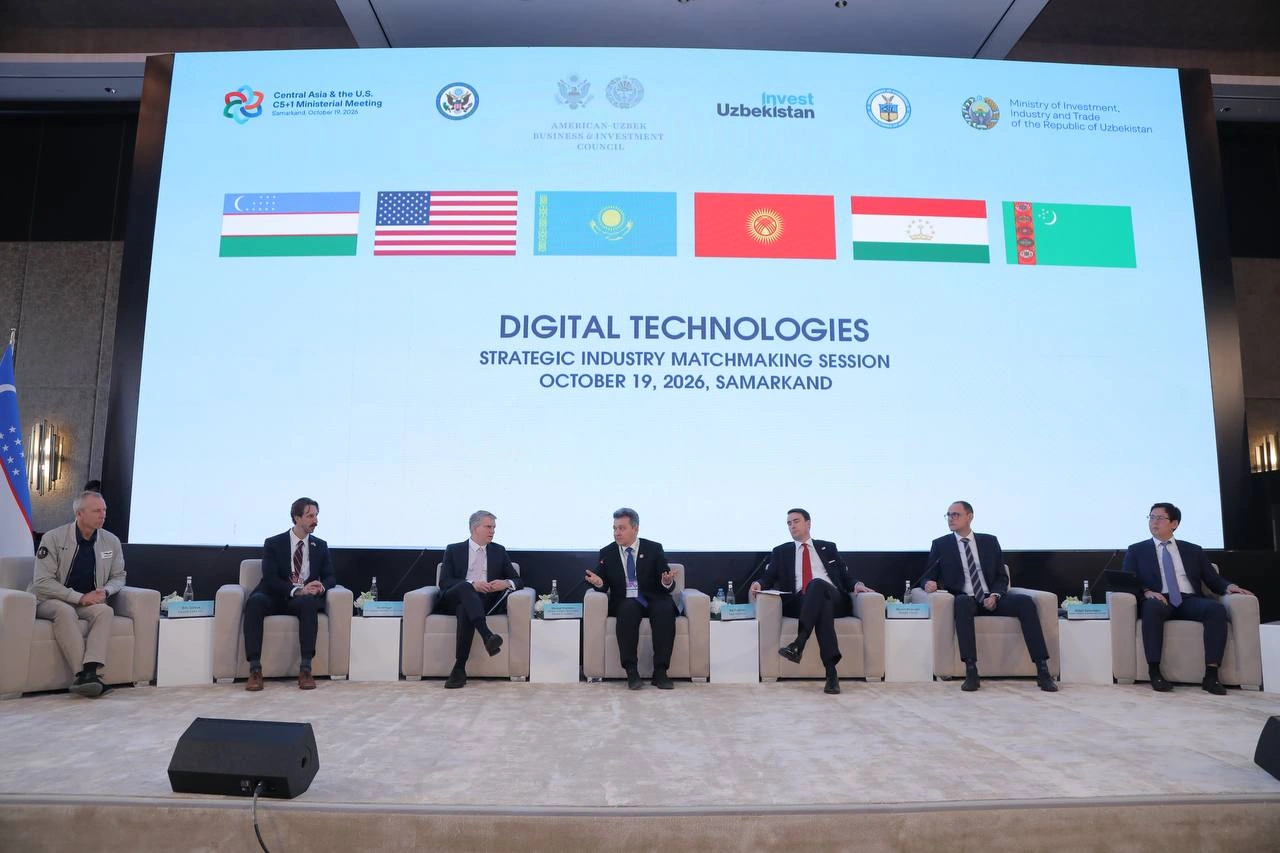
BAKU, Azerbaijan, October 19. Uzbekistan and
other Central Asian countries are seeking to expand cooperation
with U.S. technology companies in artificial intelligence, cloud
computing, and digital infrastructure, as regional governments look
to attract investment and strengthen their positions in the global
digital economy during a meeting in Samarkand on October 19.
This was reflected in the statement by Uzbekistan's Ministry of
Digital Technologies, following a digital technology panel held in
Samarkand as part of the C5+1 business program involving the United
States and Central Asian countries.
The session brought together Uzbekistan’s Digital Technologies
Minister Sherzod Shermatov, U.S. Assistant Secretary of Commerce
David Fogel, representatives of Central Asian countries and
executives from Google and other international technology
companies.
Shermatov said Uzbekistan aims to combine its domestic potential
with international partnerships to attract investment, increase IT
services exports and integrate local companies into global
technology supply chains.
“We are paying particular attention to developing human capital,
improving young people’s knowledge and skills in modern
technologies, supporting innovation and creating a favorable
business environment for international companies,” Shermatov
said.
He added that cooperation with U.S. companies could help
introduce advanced technologies and expertise, develop local
specialists and advance mutually beneficial projects.
Moreover, the minister emphasized that Central Asian countries
should view one another as partners rather than competitors, saying
regional cooperation, knowledge sharing and joint initiatives could
improve the region’s competitiveness internationally.
Additionally, the panel highlighted Uzbekistan’s investment
opportunities in information technology. Participants were
introduced to the capabilities of IT Park Uzbekistan and Enterprise
Uzbekistan, an international digital technology center designed to
attract foreign companies, support innovative businesses and help
technology projects access international markets.
Discussions identified potential areas for cooperation in the
digital economy, cloud technologies, artificial intelligence and
technology workforce development. Participants also emphasized the
importance of establishing direct business contacts and building
new partnerships.
The event forms part of broader efforts to strengthen
U.S.-Central Asian economic cooperation and attract investment into
the region’s technology sectors.