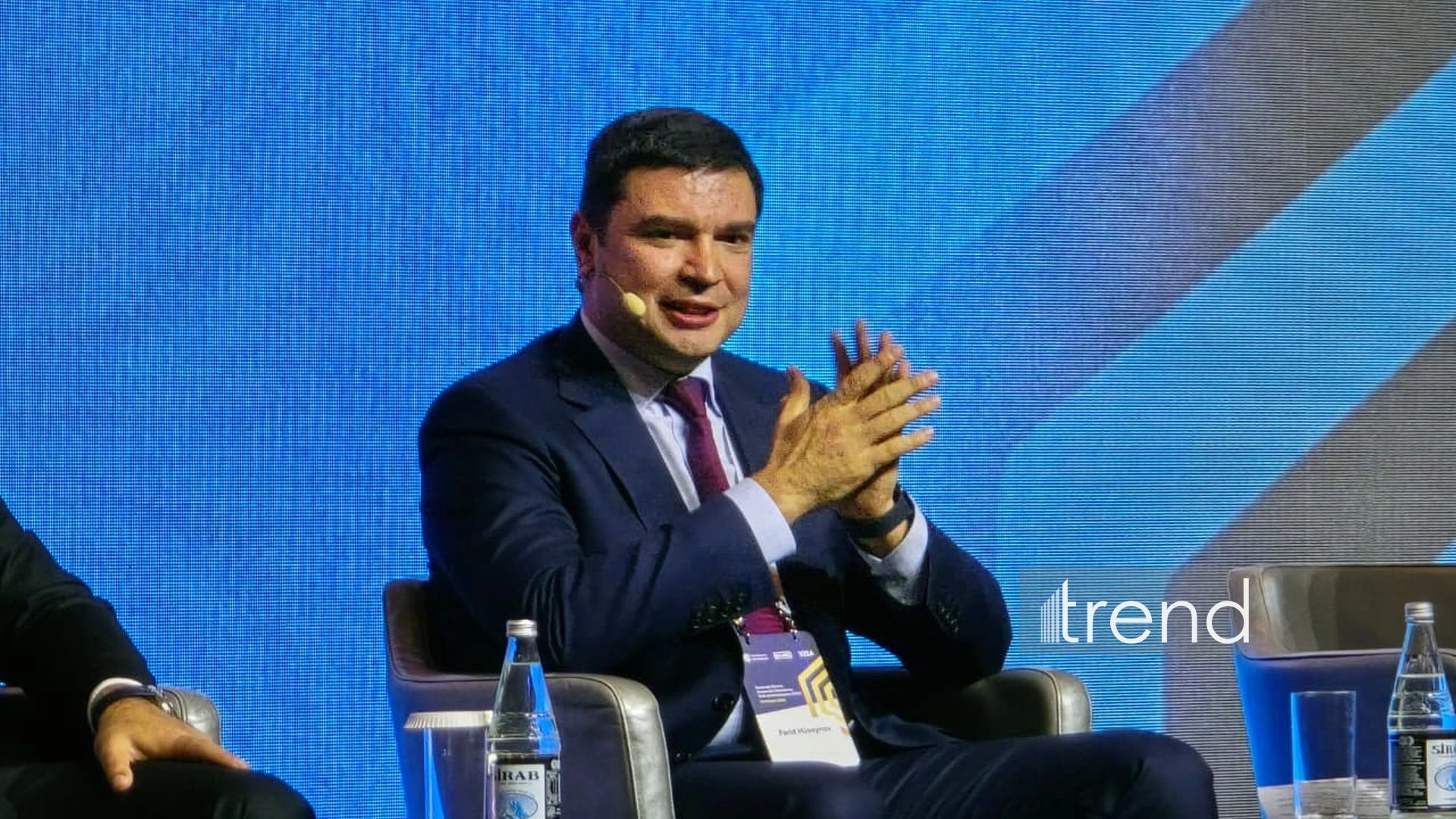
BAKU, Azerbaijan, October 20.
Adapting to changing conditions is becoming more important in risk
management, CEO at Bir Ecosystem, Farid Huseynov, said during the
Sustainable Business, Corporate Governance, Risk, and Compliance
(GRC) Conference held in Baku on Tuesday, Trend's correspondent
reports from the event.
He noted that Azerbaijan’s geographical location and
geopolitical circumstances directly influence the operations of
companies active in the country, including their approaches to risk
management.
"The primary challenge today is not merely the emergence of new
risks. Risks are becoming integrated, intertwined, and transformed.
This reflects the rapid pace of change in the modern world,"
Huseynov pointed out.
He compared this process to the "Red Queen effect," described in
Lewis Carroll’s “Through the Looking-Glass”. He explained that,
according to this concept, one must remain in constant motion just
to maintain one’s current position, and develop even faster in
order to move forward.
According to Huseynov, alongside artificial intelligence and
other technological innovations, issues such as cybersecurity,
cyberattacks, sanctions regimes, and geopolitical shifts now occupy
a significant place on the corporate agenda.
He pointed out that the impact of geopolitical processes can
also manifest in the form of cyberattacks. Noting that large-scale
Distributed Denial of Service (DDoS) attacks against certain
infrastructure have been recorded in Azerbaijan in recent days,
Huseynov emphasized the importance of a responsible and coordinated
approach to such threats.
"Previously, establishing a stable risk management system was
crucial for us. Now, however, I believe that a risk management
system capable of adapting to constantly changing conditions is of
even greater importance," he stated.
Huseynov stressed that this approach is particularly significant
for Kapital Bank, which serves a broad customer base, and for the
ecosystem as a whole. According to him, this ecosystem serves over
5 million citizens living in Azerbaijan, as well as foreign
nationals present in the country. This scale creates significant
opportunities while also demanding a high level of
responsibility.
The CEO also highlighted three key pillars of the compliance and
risk management strategy. Stating that the first area involves a
proactive approach, Huseynov noted that compliance shouldn’t be
limited to reacting to events that have already occurred; rather,
it must identify potential risks in advance, assess various
scenarios, and implement preventive measures.
Regarding the second area, the application of technology and
cybersecurity, he pointed out that real-time analytics and
artificial intelligence offer significant capabilities for
identifying risks. At the same time, he emphasized the importance
of ensuring that the use of artificial intelligence aligns with
ethical principles.
"Cybersecurity is no longer merely a technical task for the
information technology department. It's a key strategic issue that
requires attention at the highest level of corporate leadership,"
Huseynov remarked.
According to him, the third area concerns adapting to changing
conditions and shaping corporate culture. Companies should
integrate the principles of risk resilience, accountability, and
collaboration into the very fabric of their corporate culture.
Huseynov noted that the integration of these principles into the
organization’s operational model is essential for ensuring
sustainable development.