BAKU, Azerbaijan, October 21. Kazakhstan has
opened a 28-kilometer section of the Aktobe-Ulgaysyn highway, from
kilometer 791 to kilometer 819, according to the Kazakh
government.
The road forms part of the international Western Europe-Western
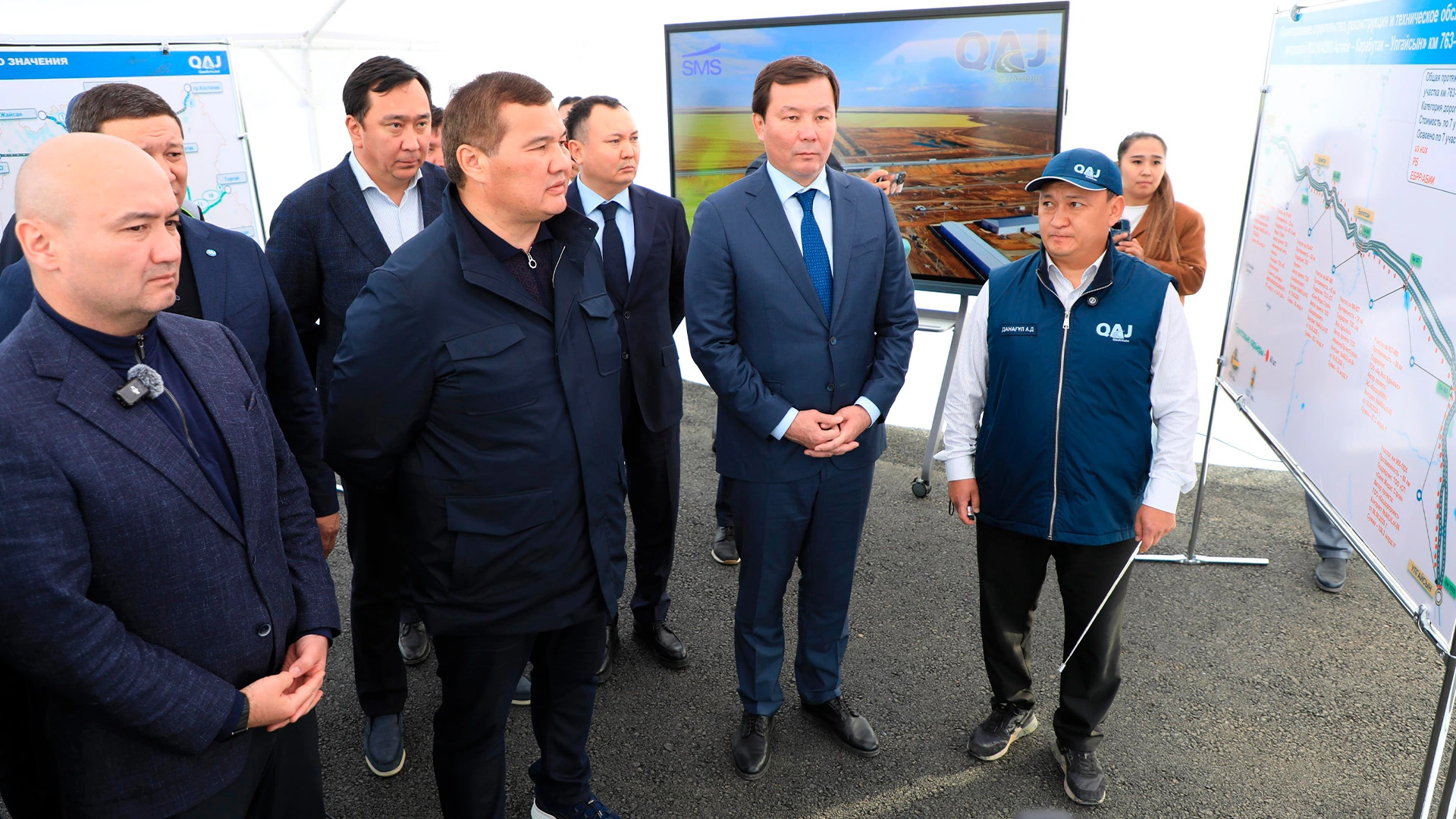
China transport corridor. First Deputy Prime Minister Nurlybek
Nalibayev visited the Aktobe region on the Prime Minister's
instructions and attended the opening ceremony.
"In August this year, President Kassym-Jomart Tokayev launched
three major road projects in the Aktobe, Mangystau and Kyzylorda
regions via video conference. These are the Aktobe-Ulgaysyn,
Ulgaysyn-Sekseuil and Sekseuil-Kyzylorda routes. The
Aktobe-Ulgaysyn project provides for the reconstruction of 262
kilometers of highway, upgrading it from technical category II to
category I. A new road is also being built through sandy terrain
between Sekseuil and Beineu. Approximately 3 trillion tenge has
been allocated for the three projects. More than 1,900 kilometers
of roads are planned to be built or reconstructed over the next
three years. Contractors have also been tasked with making every
effort to complete the projects ahead of schedule," Nalibayev
said.
A special commission has been established on the Prime
Minister's instructions to monitor road construction quality. It
includes scientists, road industry specialists, government
representatives and members of parliament.
The commission reviews the quality of construction materials,
including bitumen, crushed stone and other components, as well as
the regulation of heavy-vehicle weight loads on road surfaces.
Nalibayev said stricter road quality requirements were intended
to improve traffic safety. Four-lane roads are expected to reduce
the risk of vehicles entering the oncoming lane. Special vehicles
and rescue equipment are also being acquired to assist drivers who
encounter difficulties on roads during winter.
The main construction work on the newly opened 28-kilometer
section has been completed. Road lighting and safety barriers are
scheduled to be installed within the next two weeks.
The use of quality construction materials helps strengthen road
foundations and extend the service life of highways.
According to Zhanibek Medetov, head of the laboratory at Sine
Midas Stroy LLP, specialists first test soil delivered from
quarries to determine its maximum density and optimum moisture
content.
Crushed stone in 10-20 mm and 5-10 mm fractions is tested using
special sieves. Specialists also assess the materials' density and
frost resistance. Materials that do not meet the required standards
are rejected and excluded from construction.
The laboratory also monitors the quality of asphalt concrete
mixtures and bitumen. Asphalt mixtures delivered from the plant,
along with core samples taken from the laid road surface, undergo
testing using specialized presses and vacuum equipment.
Specialists assess bitumen's resistance to high and low
temperatures, its ductility and density. Tests are conducted at
50°C and 0°C to determine whether the material meets established
standards. The company's laboratory employs 10 people.
Construction machinery and equipment used in the road project
were also demonstrated during the visit.