BAKU, Azerbaijan, October 21. Uzbekistan and
the International Maize and Wheat Improvement Center (CIMMYT) aim
to reduce the time required to develop new wheat varieties from
12–15 years to four to five years through the introduction of speed
breeding technology at a meeting on October 21 in United
States.
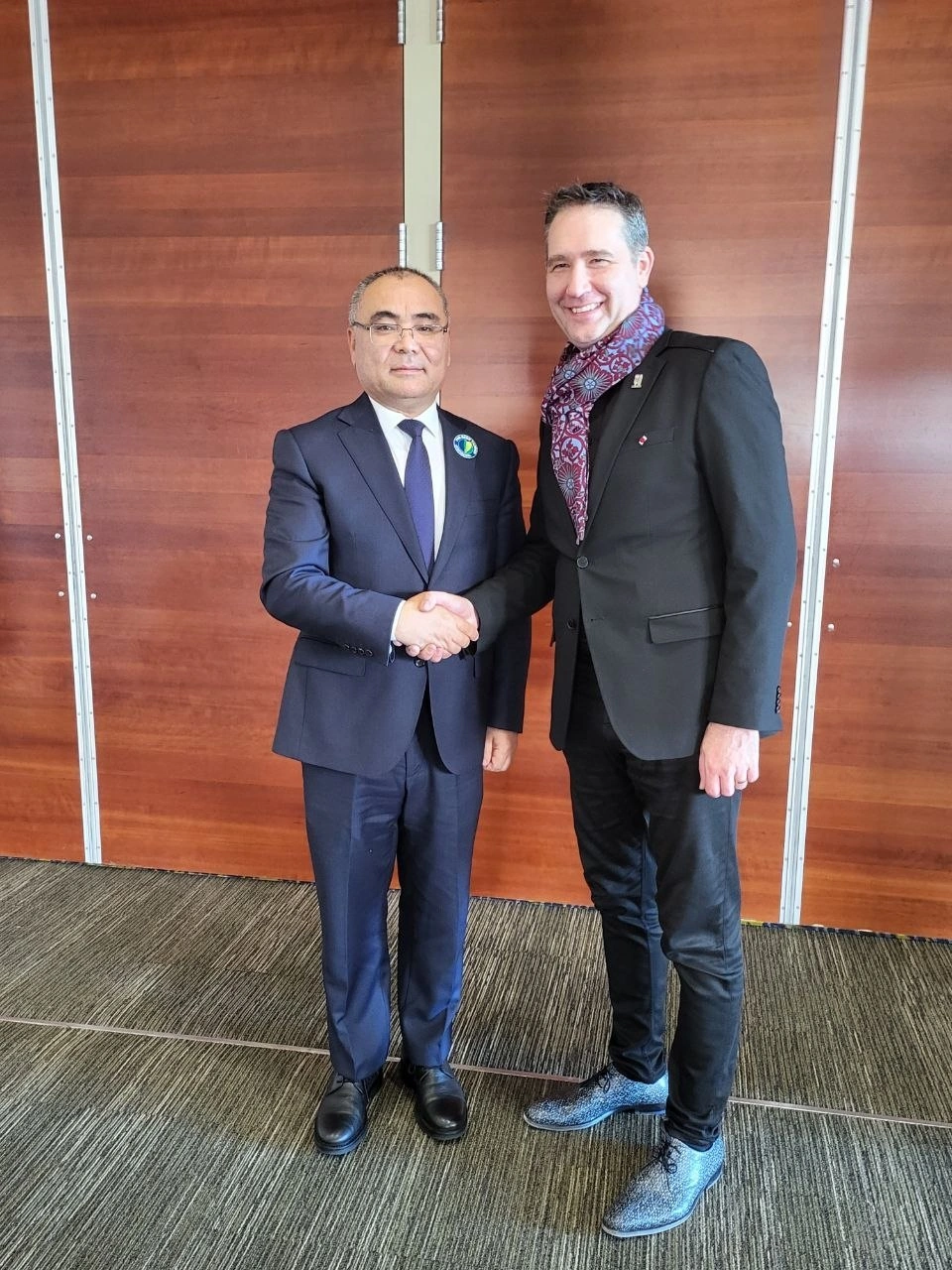
This was reflected in the statement by the Uzbekistan Ministry
of Agriculture, following a meeting between Uzbekistan’s
Agriculture Minister Ibrokhim Abdurakhmonov and CIMMYT Director
General Bram Govaerts in the United States.
During the meeting, Abdurakhmonov thanked CIMMYT’s leadership
for its cooperation with Uzbekistan. Govaerts, in turn, noted the
country’s rapid development, saying he had witnessed the changes
firsthand.
The parties are already working together to strengthen the
research capacity and technical infrastructure of the Southern
Agricultural Research Institute in Uzbekistan.
One of the key areas of cooperation is the introduction of speed
breeding technology, which aims to reduce the time required to
develop new wheat varieties from 12–15 years to four to five
years.
Moreover, the partnership includes professional development
programs for Uzbek scientists and specialists at CIMMYT’s
headquarters in Mexico and its center in Türkiye.
Abdurakhmonov noted that Uzbekistan is also adopting new
agricultural practices, including reviewing wheat planting
schedules and applying seed vernalization techniques to improve
crop development.
The parties agreed to further expand cooperation, exchange
expertise and organize additional training programs for local
agricultural specialists.
The International Maize and Wheat Improvement Center (CIMMYT) is
a nonprofit international agricultural research organization
founded in 1966 and headquartered in Texcoco, Mexico. It develops
improved varieties of maize and wheat, focusing on higher yields,
disease resistance, climate resilience and sustainable farming.
CIMMYT is part of the global CGIAR network of agricultural research
centers and works with research institutions and farmers in dozens
of countries.