ASHGABAT, Turkmenistan, October 22. Scientific
research and environmental assessments must be taken into account
when designing and implementing oil and gas projects in the Turkmen
sector of the Caspian Sea, as they help improve the reliability of
technical solutions, reduce risks, and ensure the predictability of
long-term investments, the director of the Caspian Sea Institute,
Myrat Atajanov said, Trend's special correspondent reports.
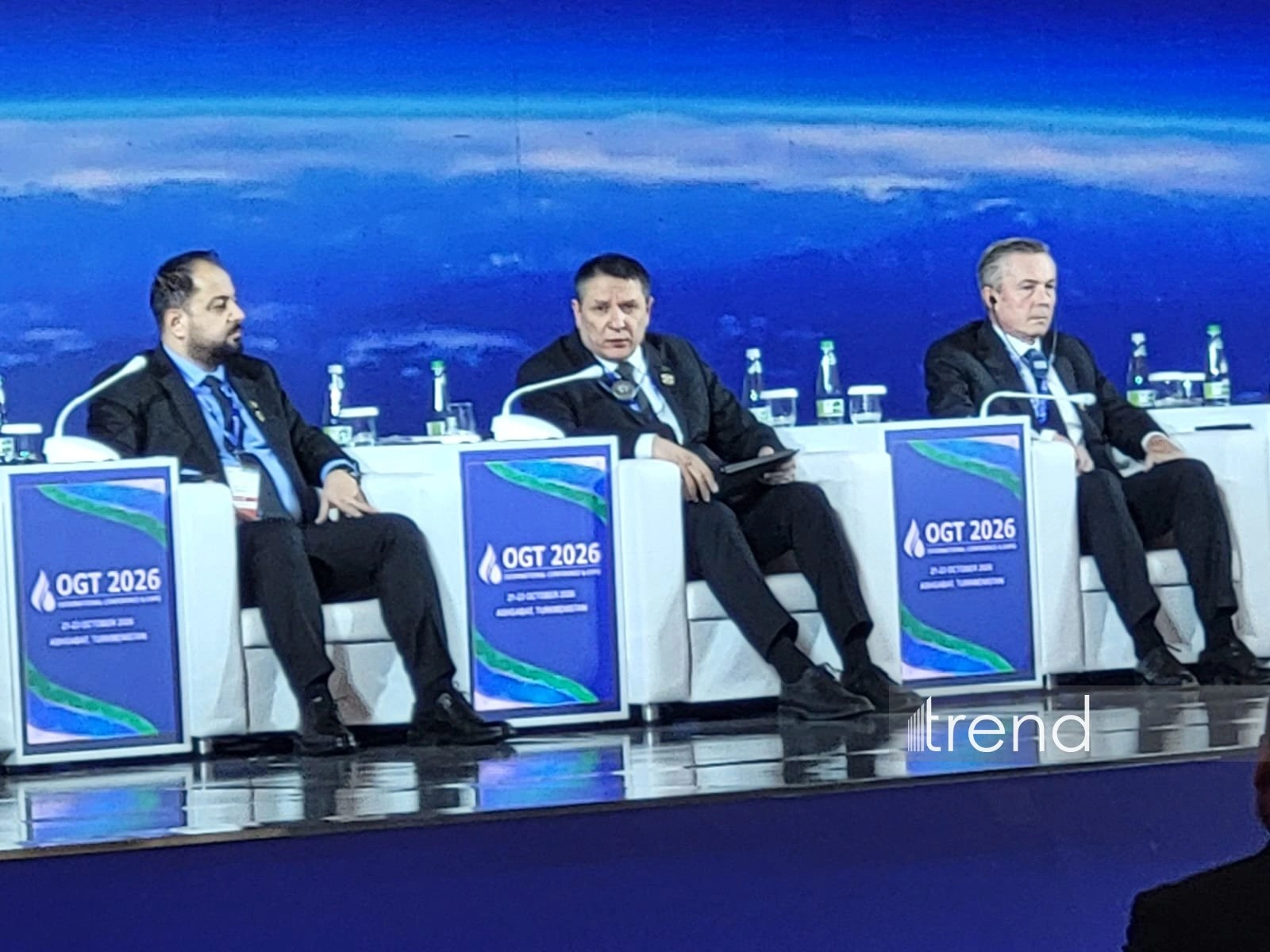
Atajanov made the statement on Thursday while speaking at the
31st International Conference and Exhibition “Oil and Gas of
Turkmenistan” (OGT 2026) in Ashgabat.
“Scientific research and environmental assessments are not
merely an additional procedure in the implementation of oil and gas
projects, but rather the foundation for making technical,
investment, and environmental decisions,” he emphasized.
According to Atajanov, comprehensive scientific support is
necessary at all stages of project implementation, from geological
exploration and design to field operation and decommissioning. This
should include studying the geological structure of the subsurface,
the condition of the seafloor, hydrometeorological conditions, and
shoreline dynamics, as well as assessing the state of marine
ecosystems.
He paid particular attention to forecasting the possible
consequences of accidental hydrocarbon spills, developing measures
to prevent such incidents and mitigate their consequences, as well
as assessing the cumulative impact of oil and gas infrastructure on
the marine environment.
Myrat Atajanov noted that the development of Caspian resources
must comply with the provisions of the Convention on the Legal
Status of the Caspian Sea of August 12, 2018, which provides for
the exploration and development of the sea’s resources and its
subsoil, while also enshrining the principles of rational resource
use and the conservation of the marine ecosystem.
“The development of hydrocarbon potential and the protection of
the marine environment must be viewed as interrelated tasks,” he
said.
Speaking about practical measures, the institute’s director
emphasized the need to take into account various scenarios for
changes in the Caspian Sea’s water level when planning oil and gas
activities. According to him, changes in water depths and the
configuration of the coastline could affect the operation of
coastal production facilities, access channels, port
infrastructure, offshore platforms, and subsea pipelines.
“Under these conditions, scientific assessments must include
various sea-level change scenarios, an analysis of infrastructure
vulnerability, and the development of adaptation measures,”
Atajanov noted.
He also highlighted the importance of the Commission on the
Shallowening of the Caspian Sea, which the leaders of the five
Caspian states agreed to establish on October 9 at the First
Caspian Environmental Summit in the Avaza National Tourist
Zone.
According to Atajanov, the commission’s work should be based on
objective scientific data and coordinated approaches among all five
states.
“It is of fundamental importance to ensure regular monitoring,
the comparability of research results, and the practical
application of scientific findings when making economic decisions,”
he concluded.
Meanwhile, the second day of the 31st International Conference
and Exhibition “Oil and Gas of Turkmenistan” (OGT 2026) has begun
in Ashgabat. As part of the event, a session is being held on the
topic “Investment and development opportunities in the Turkmen
sector of the Caspian Sea.” Discussions are focusing on investment
opportunities for developing the Turkmen sector, prospects for
offshore exploration and production of hydrocarbons, and the
development of international partnerships.
The agenda also includes existing and new production-sharing
agreements (PSAs), as well as modern seismic survey programs
designed to help assess resource potential and prepare promising
blocks for development.