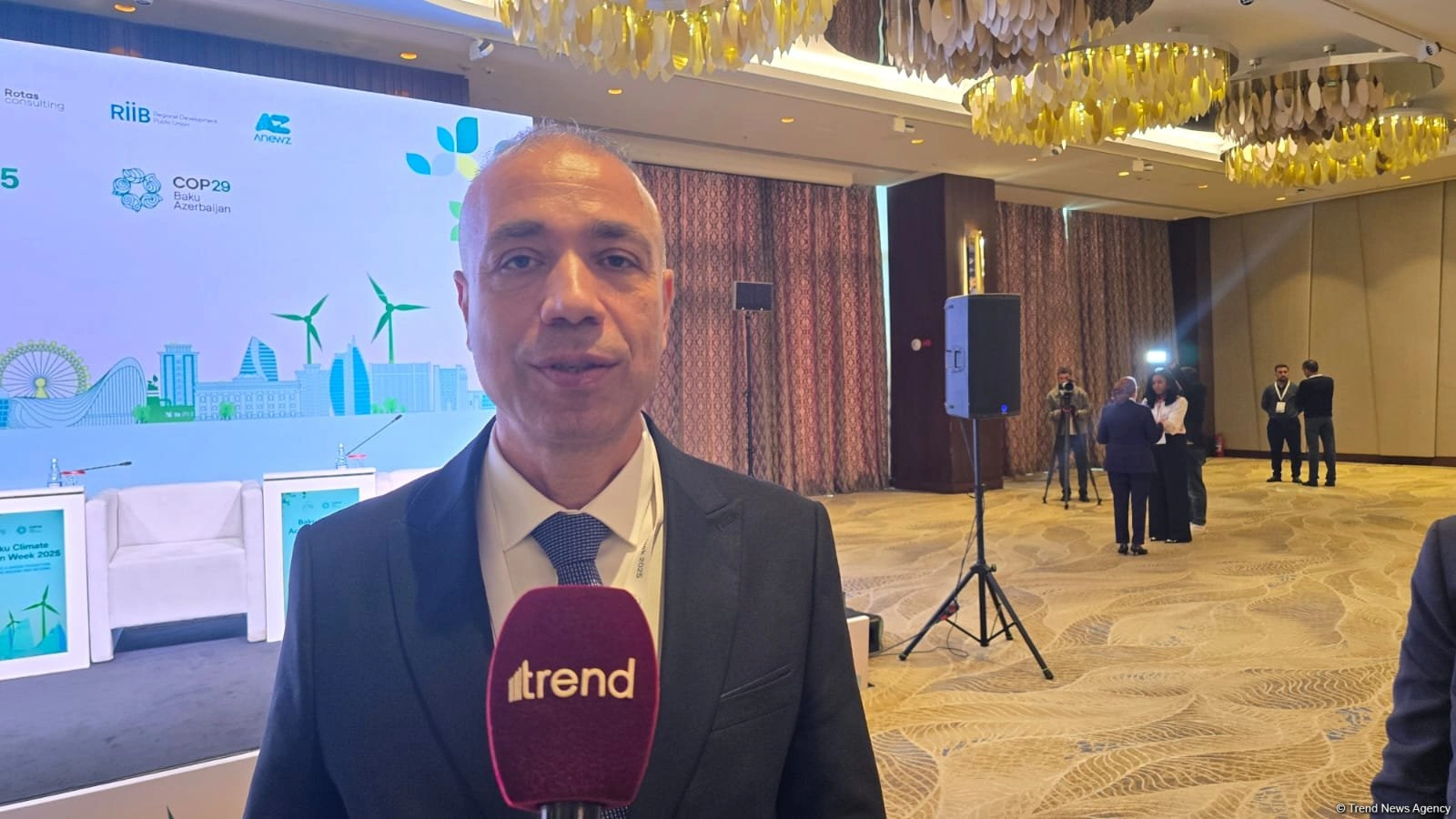
BAKU, Azerbaijan, October 22. Billions of
dollars will be needed to implement the green energy corridor
project designed to transmit electricity from Azerbaijan to Europe
via an undersea cable across the Black Sea, Azerbaijani Deputy
Energy Minister Elnur Soltanov told Trend on Thursday.
He said the project's feasibility study had confirmed its
technical and economic viability.
“Azerbaijan began its journey as an oil-producing country around
150 years ago and, after gaining independence, also became a
natural gas producer. In the 21st century, the next logical step is
for Azerbaijan to become a green energy country. The country has
significant renewable energy resources, particularly offshore wind
power, whose potential can be scaled up,” he noted.
According to Soltanov, the feasibility study showed that
Azerbaijan's renewable energy could be supplied to European
countries westward, much like its oil and natural gas.
He also recalled the establishment of a joint venture involving
Azerbaijan, Georgia, Romania and Hungary to advance the
project.
“First came the idea, then the concept, followed by a
feasibility study that confirmed the project's technical and
economic viability. The next step is to determine how to implement
it. We need to identify funding sources, including international
financial institutions, to move from the idea, concept and
feasibility study results to implementation,” Soltanov said.
He stressed that projects of this scale require investments
worth billions of dollars and several years to complete.
“Rather than expecting quick results, we need to maintain a
strategic vision and focus on it,” he said.
On December 17, 2022, Azerbaijan, Georgia, Romania and Hungary
signed a strategic partnership agreement providing for the
construction of a 1,000-megawatt undersea power cable stretching
1,195 kilometers across the Black Sea.
The cable is intended to transmit green electricity generated in
Azerbaijan and Georgia to Romania, from where it would be
transported to Hungary and other European countries. The project
aims to expand European countries' access to renewable energy
resources in the Caucasus region.
In September 2024, electricity transmission system operators
Transelectrica of Romania and Georgian State Electrosystem,
Azerbaijan's AzerEnerji and Hungary's MVM established a joint
venture to implement the Black Sea undersea cable project.