ASHGABAT, Turkmenistan, October 23.
Turkmenistan plans to use the Regional Center for Climate
Technologies for Central Asia, currently being established in
Ashgabat, as a platform for sharing its accumulated experience in
climate technologies and greenhouse gas emission reduction with
countries in the region, the Advisor on Environmental, Climate
Change and Water Diplomacy at the Ministry of Foreign Affairs of
Turkmenistan, Magtymguly Akmuradov said, Trend's special correspondent reports.
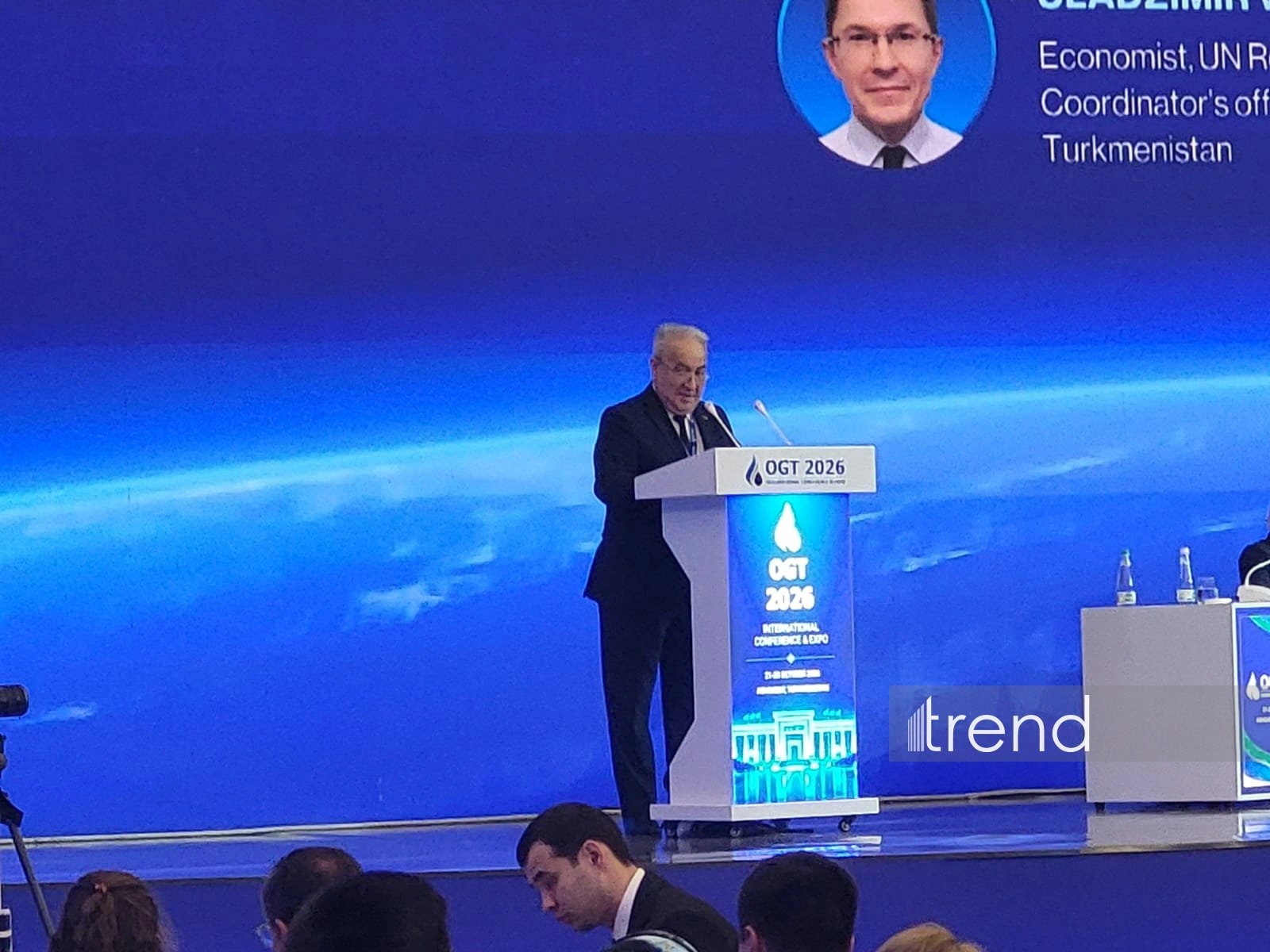
Akmuradov made the statement on the third day of the OGT 2026
conference in Ashgabat on October 23..
“One such example I would like to mention is President Serdar
Berdimuhamedov’s initiative to open the Regional Center for Climate
Technologies for Central Asia in Ashgabat. Intensive work is
currently underway, and preparations are in progress for COP31,
where we are also organizing many such events. We believe that this
center will serve as a key tool for sharing accumulated expertise
in this field, which all Central Asian countries will be able to
utilize,” he stated.
According to him, the international exchange of technical
knowledge and best practices is essential for fulfilling
Turkmenistan’s climate commitments, including those under the Paris
Agreement and the Global Methane Pledge. To achieve its methane
emission reduction targets by 2030, the country intends to carry
out a comprehensive modernization of the energy sector and take
additional measures.
“As our moderator quite rightly pointed out, no single country
is capable of addressing the issue of reducing methane emissions on
its own; therefore, it is very important to draw on the vast global
experience accumulated in the oil and gas sector to carry out the
necessary work to reduce methane emissions,” Akmuradov noted.
He also highlighted the interconnection between climate and
energy challenges in Central Asia. Among the region’s common
challenges, he cited changes in river flow patterns due to glacial
melting, more frequent droughts, and growing demand for water and
electricity. Under these circumstances, he believes, countries in
the region need to develop scientifically sound, long-term
solutions.
“In this regard, I would like to highlight three main areas. The
first is the broader application of scientific knowledge and modern
technologies to improve the management of water and energy
resources. I believe that research institutes and organizations
should pay special attention to developing models for forecasting
water resources, assessing the impacts of climate change, and
devising science-based approaches to optimizing water use. Second,
it is necessary to take into account the close interconnection
between water and energy resources and to develop comprehensive
approaches to their rational and efficient use. Third, cooperation
with international organizations plays a major role,” he said.
Akmuradov emphasized that international organizations can help
countries in the region not only attract additional funding but
also coordinate joint initiatives. He also noted the importance of
international technical cooperation in narrowing the technological
gap between countries, standardizing methane emission measurement
standards, and accelerating the adoption of new solutions.
As an example of international support, the representative of
the Ministry of Foreign Affairs of Turkmenistan cited the recent
transfer of lidar equipment for detecting methane leaks to the
state-owned concern “Turkmengaz.” The ceremony took place as part
of the European Union’s “Green Development” project, implemented
under the “Green Central Asia” initiative launched in 2020:
“The project involves many different activities, including those
aimed at reducing methane emissions,” Akmuradov said.
According to him, the introduction of lidar technology can yield
both environmental and economic benefits by enabling the detection
of methane leaks and helping the country fulfill its international
obligations. He added that Turkmenistan is interested in further
developing international cooperation in this area.
“International assistance in the field of oil production and
industrial technologies is of great importance to Turkmenistan, so
we are always open to cooperation,” Akmuradov concluded.
Meanwhile, the final day of the 31st International Conference
and Exhibition “Oil and Gas of Turkmenistan” (OGT 2026) is underway
in Ashgabat.
On the third day, participants are discussing ways to reduce
methane emissions, improve environmental and energy efficiency, and
the role of natural gas in ensuring a balanced and sustainable
energy future.
Participants are exploring opportunities for international
exchange of expertise and technologies aimed at reducing greenhouse
gas emissions and improving the environmental performance of the
oil and gas industry. In addition, the role of natural gas in
shaping a balanced energy system is being discussed.