ASHGABAT, Turkmenistan, October 23.
Turkmenistan aims to reduce methane emissions by 40–60% at two
pilot sites in the Ahal and Lebap regions through the use of
equipment for detecting and eliminating leaks, Head of the "Green
Central Asia, phase II" programme and the project "European Union
for a Green Turkmenistan: Policy Dialogue and Climate Action
2024–2029", Caroline Milow said, Trend's special correspondent reports.
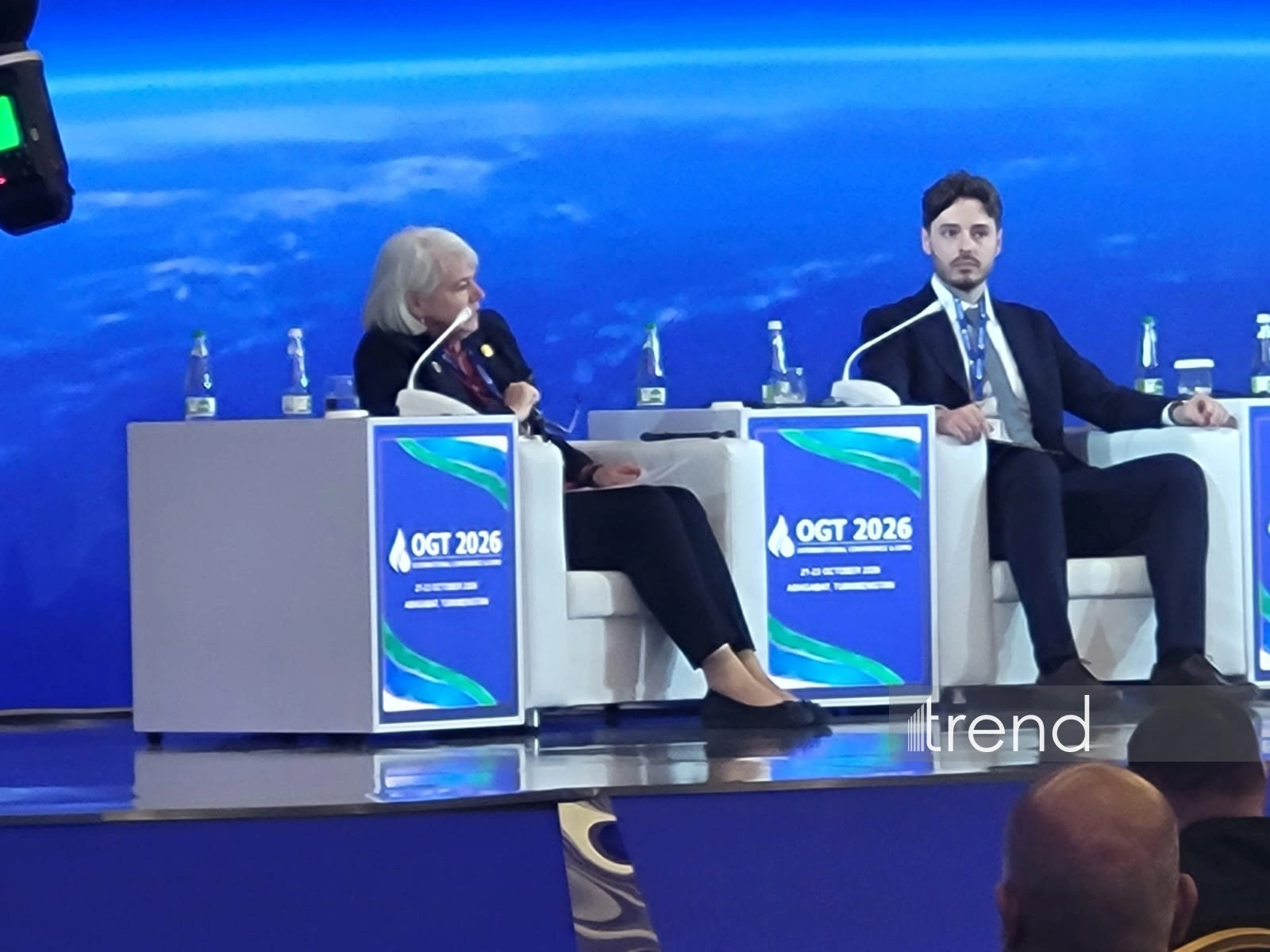
Milow made the remark on the third day of the OGT 2026
conference in Ashgabat on October 23.
"The projects also include the introduction of renewable energy
sources, improvements in energy efficiency, and the modernization
of power infrastructure," she said.
According to Milow, the German Society for International
Cooperation (Deutsche Gesellschaft für Internationale
Zusammenarbeit (GIZ)) is implementing projects in Turkmenistan in
collaboration with the European Union and other European partners.
A key focus area is the reduction of methane emissions through the
use of modern technologies, including Leak Detection and Repair
(LDAR) equipment, satellite monitoring, and artificial
intelligence-based solutions.
"We are working toward achieving measurable emission reductions.
By providing LDAR equipment, we aim to reduce emissions by 40–60%
at two pilot sites in the Ahal and Lebap regions," she noted.
Milow emphasized that reducing emissions yields both
environmental and economic benefits, as it allows for the
conservation of gas that would otherwise be lost. She added that
further opportunities lie in combining traditional energy sources
with renewable energy.
Another area of cooperation involves the application of
renewable energy in agriculture and water resource management. In
partnership with the Mary Energy Institute under the Ministry of
Energy of Turkmenistan, a pilot project is underway to use
solar-powered pumps to deliver drainage water, purified via algae,
to agricultural fields.
"In this way, we are combining improvements in both water and
energy efficiency," Milow explained.
As part of the 'Team Europe' initiative, GIZ is also
collaborating with the EU and the German Federal Ministry for
Economic Cooperation and Development on the modernization of power
grids and the integration of renewable energy sources. In
particular, it's planned to implement a renewable energy system in
the Dashoguz region, in collaboration with the state concern
"Turkmenenergo."
According to Milow, the work also encompasses improving the
planning and management of power grids, introducing specialized
software, and developing national human resource capacity. Together
with partners from Turkmenistan and other Central Asian countries,
GIZ intends to support the creation of educational programs
designed to train young professionals for the energy sector.
Furthermore, Milow highlighted the importance of regional
climate cooperation and welcomed Turkmenistan’s accession to the
Regional Strategy on Climate Change, developed under the "Green
Central Asia" initiative. She noted that GIZ projects are aimed not
only at achieving climate goals but also at strengthening water and
food security, modernizing energy systems, and fostering the
long-term development of professional expertise.
Regarding opportunities for European businesses, Milow pointed
out that EU companies could contribute to reducing methane
emissions, enhancing energy efficiency, and implementing renewable
energy solutions in Turkmenistan. She stated that expanding such
cooperation would yield tangible economic results and strengthen
ties between European and Turkmen enterprises.
At the same time, she emphasized that increasing the
transparency of the investment climate would help encourage greater
participation by European businesses in projects within the
country. Milow added that the EU Delegation and the embassies of EU
member states stand ready to facilitate business connections and
relay requests for cooperation, specifically concerning methane
emission reduction, to European companies.
In an earlier exclusive interview with Trend, representatives from the United Nations
Environment Programme (UNEP) noted the effectiveness of their
cooperation with Turkmenistan in the area of methane emission
reduction. "This collaboration has made it possible to establish
reliable communication channels for the rapid transmission of MARS
alerts directly to government authorities and companies capable of
taking action to eliminate emissions," the organization
reported.
According to UNEP, eight methane leak sources in Turkmenistan,
associated with pipelines, wells, and flare systems, have been
successfully eliminated. Prior to their remediation, these sources
had collectively released more than 27,000 tons of methane into the
atmosphere.
Meanwhile, the final day of the 31st International Conference
and Exhibition “Oil and Gas of Turkmenistan” (OGT 2026) is underway
in Ashgabat.
On the third day, participants are discussing ways to reduce
methane emissions, improve environmental and energy efficiency, and
the role of natural gas in ensuring a balanced and sustainable
energy future.
Participants are exploring opportunities for international
exchange of expertise and technologies aimed at reducing greenhouse
gas emissions and improving the environmental performance of the
oil and gas industry. In addition, the role of natural gas in
shaping a balanced energy system is being discussed.