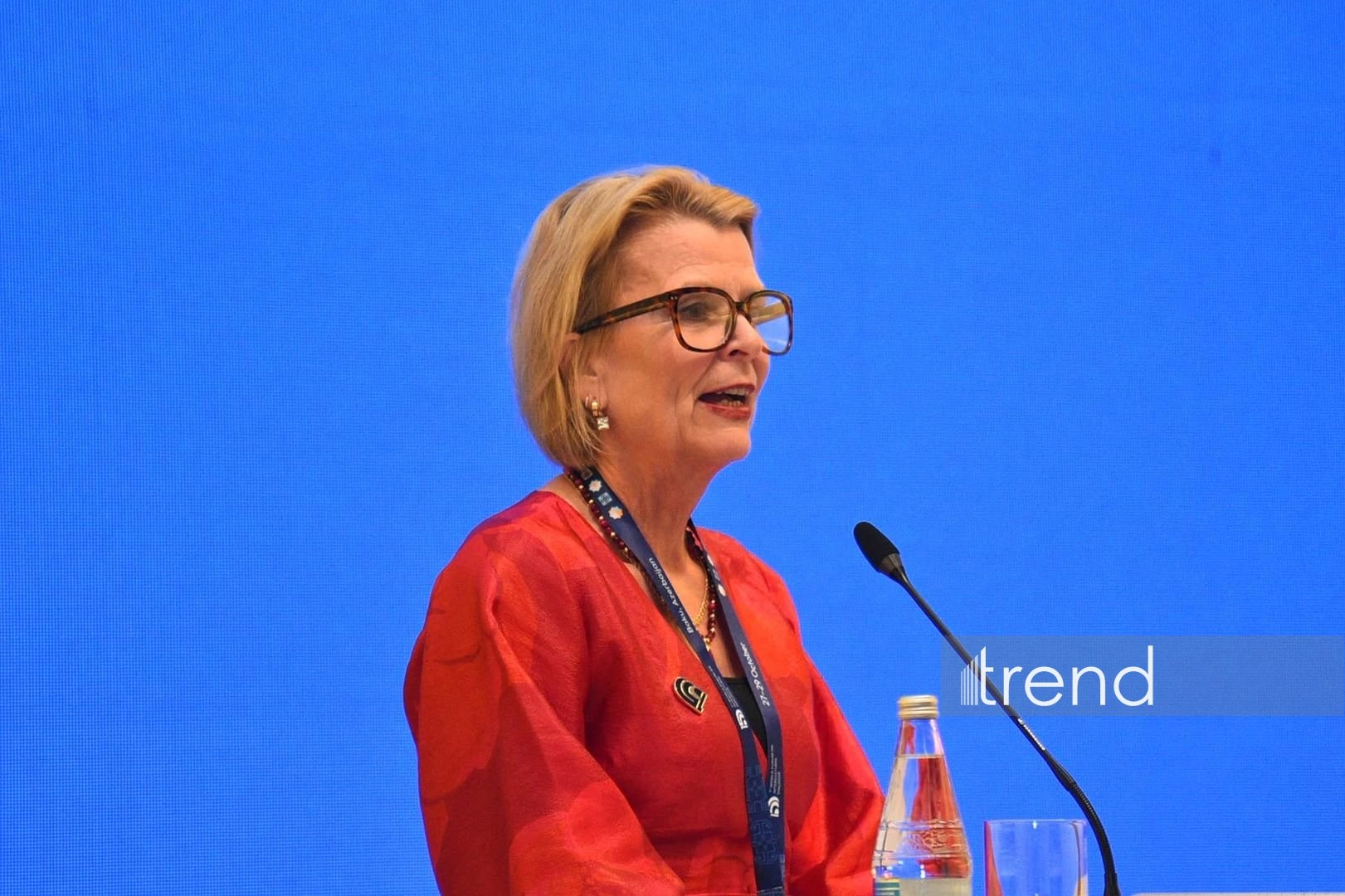
BAKU, Azerbaijan, October 27. Young people
should not only be beneficiaries of policy, but also partners in
its development and implementation, UNESCO Deputy Director-General
Åsa Regnér said during the discussion “Intercultural Leadership for
a Shared Future,” held on Tuesday as part of the World Forum on
Intercultural Dialogue, Trend's correspondent reports from the event.
She noted that, despite the growing interconnectedness of
societies around the world, deep divisions still persist.
"Despite all this renewal around us, people sometimes feel
lonelier than ever. In these circumstances, the ability to
understand different perspectives, build trust between communities,
and unite people around shared solutions and new ideas is of
paramount importance," she said.
According to Åsa Regnér, young people do not want to be left to
face contemporary challenges on their own, nor do they want to be
consulted only at certain stages of policy development: They truly
want to participate in decision-making. At UNESCO, we consider it
very important that young people — young women and young men — be
at the center of everything the organization does
The Deputy Director-General stated that the consultations on
education beyond 2030 took into account the views of more than
200,000 young people from 194 countries. Their priorities include
employment opportunities, education in conflict situations, digital
literacy, affordable education, indigenous languages, gender
stereotypes, and combating discrimination.
She noted that these findings will be presented at the Global
Education Summit in Bangkok in the spring of 2027, which will help
shape the agenda for education and youth learning beyond 2030.
Åsa Regnér emphasized the importance of ensuring that youth
engagement is accompanied by concrete actions. According to her,
more than 450 young people have received training through UNESCO’s
“Youth as Researchers” initiative. Since 2023, UNESCO’s Global
Youth Grants Program has supported more than 240 young leaders and
organizations through grants and mentoring.
She said that during the first phase of the “Youth for Peace”
initiative, 50 young people benefited from more than 400 mentoring
sessions, and UNESCO allocated half a million U.S. dollars to
support 48 local initiatives.
“We are now launching the second phase of the program. This
phase will bring together another 50 young leaders, with a special
focus on intercultural dialogue in the age of artificial
intelligence,” Åsa Regnér added.