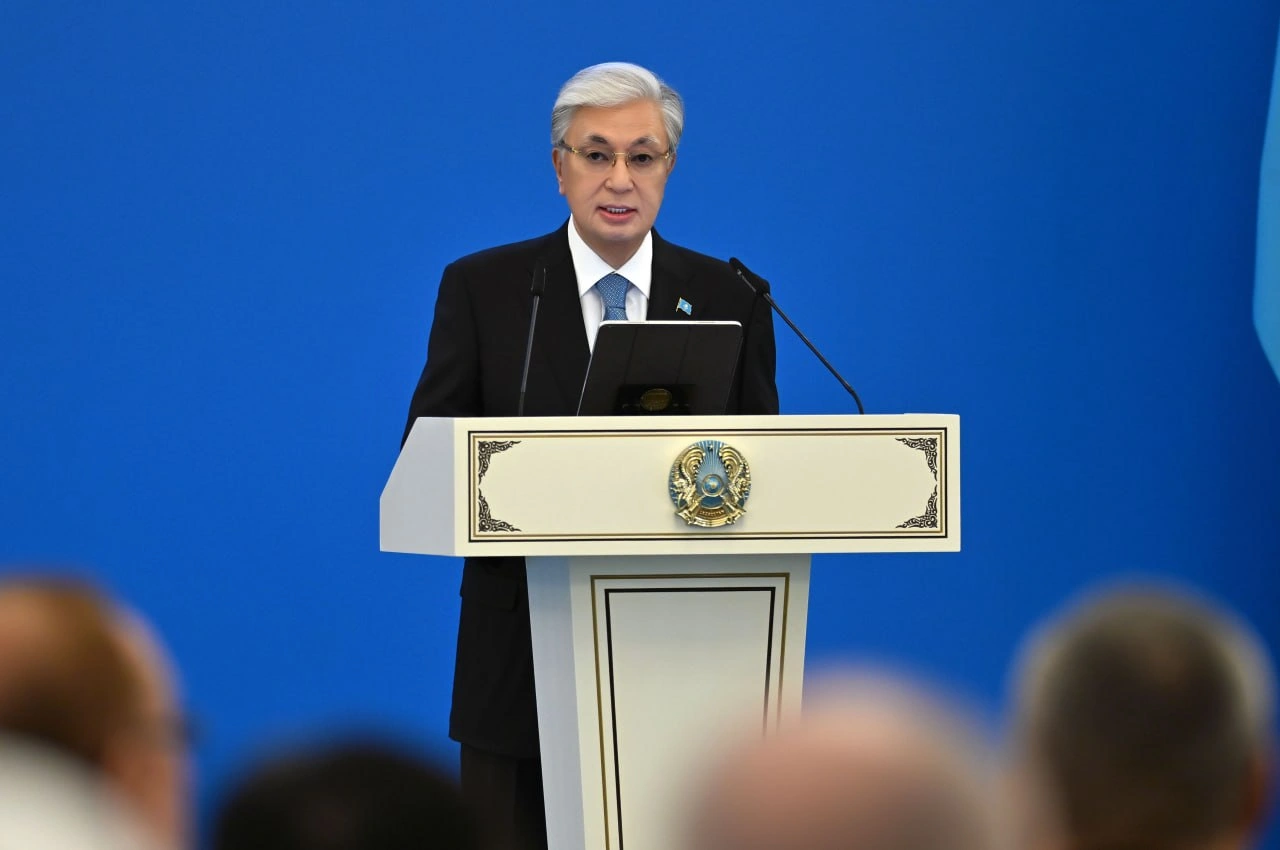
BAKU, Azerbaijan, October 28. Kazakh President
Kassym-Jomart Tokayev said that Kazakhstan should develop a
document outlining long-term priorities for the country's
development within a year, according to the presidential press
service.
He made the statement in his Address to the People of
Kazakhstan.
Tokayev said Kazakhstan was entering a new historical cycle,
requiring a critical reassessment of national plans and
strategies.
"At this turning point, we must critically rethink all national
plans and strategies. We should have a clear understanding of what
'baggage' we will carry as we approach the next landmark in our
independence," he said.
According to the president, looking towards the distant future
will help determine current tasks and priorities, maintain a firm
course on the country's sovereign strategy and implement plans for
development.
"Therefore, the Presidential Administration, together with the
Agency for Strategic Planning and Reforms and with the involvement
of research centers, primarily the Kazakhstan Institute for
Strategic Studies, should develop a document outlining long-term
priorities for the country's development within a year. I believe
members of parliament could also contribute to drafting this
important document," Tokayev said.
He noted that this work should begin with reforming the public
administration system.
Following the entry into force of the Constitution, Kazakhstan's
political system had been fully modernized, making the tasks facing
state institutions more complex, Tokayev said. In line with the new
strategy for developing the system of government, fundamental
reform of public administration had become necessary.
Tokayev noted that the main priority should be to improve the
efficiency of the entire state apparatus and every civil servant.
The management structure should be reviewed at all levels, from the
government to rural akims, he said. The public administration
system must meet the demands of the digital age and make effective
use of artificial intelligence. State institutions should be
encouraged to put forward sound initiatives and make decisions
independently.
According to him, each institution must clearly understand not
only its own powers but also how the state apparatus operates as a
whole. Artificial intelligence should be used to eliminate
duplicated tasks and contradictions in the management system.
The state apparatus must completely eliminate excessive
paperwork and reduce all procedures that hinder decision-making and
development, Tokayev said.
Civil servants should be professionally competent and highly
qualified, although Kazakhstan had yet to fully achieve this
standard, he noted. New ethical principles for civil servants
should therefore be developed. Civil servants must be guided by the
Constitution and serve their country and people faithfully.
Tokayev stressed that Kazakhstan needed genuine reform rather
than the imitation of change, adding that the process would require
legal and financial measures. The Presidential Administration must
submit a comprehensive plan to reform the public administration
system by June 1, 2027.
In conclusion, Tokayev said the public administration system
needed to be modernized and adapted to a new economy based on
digital technologies and artificial intelligence.