BAKU, Azerbaijan, October 30. Uzbekistan is
studying South Korea’s experience in air quality monitoring and
industrial emissions control as part of efforts to advance its
nationwide Clean Air project and prepare an investment initiative
to improve ambient air quality.
According to Uzbekistan’s National Committee on Ecology and
Climate Change, a delegation from the committee and the Ministry of
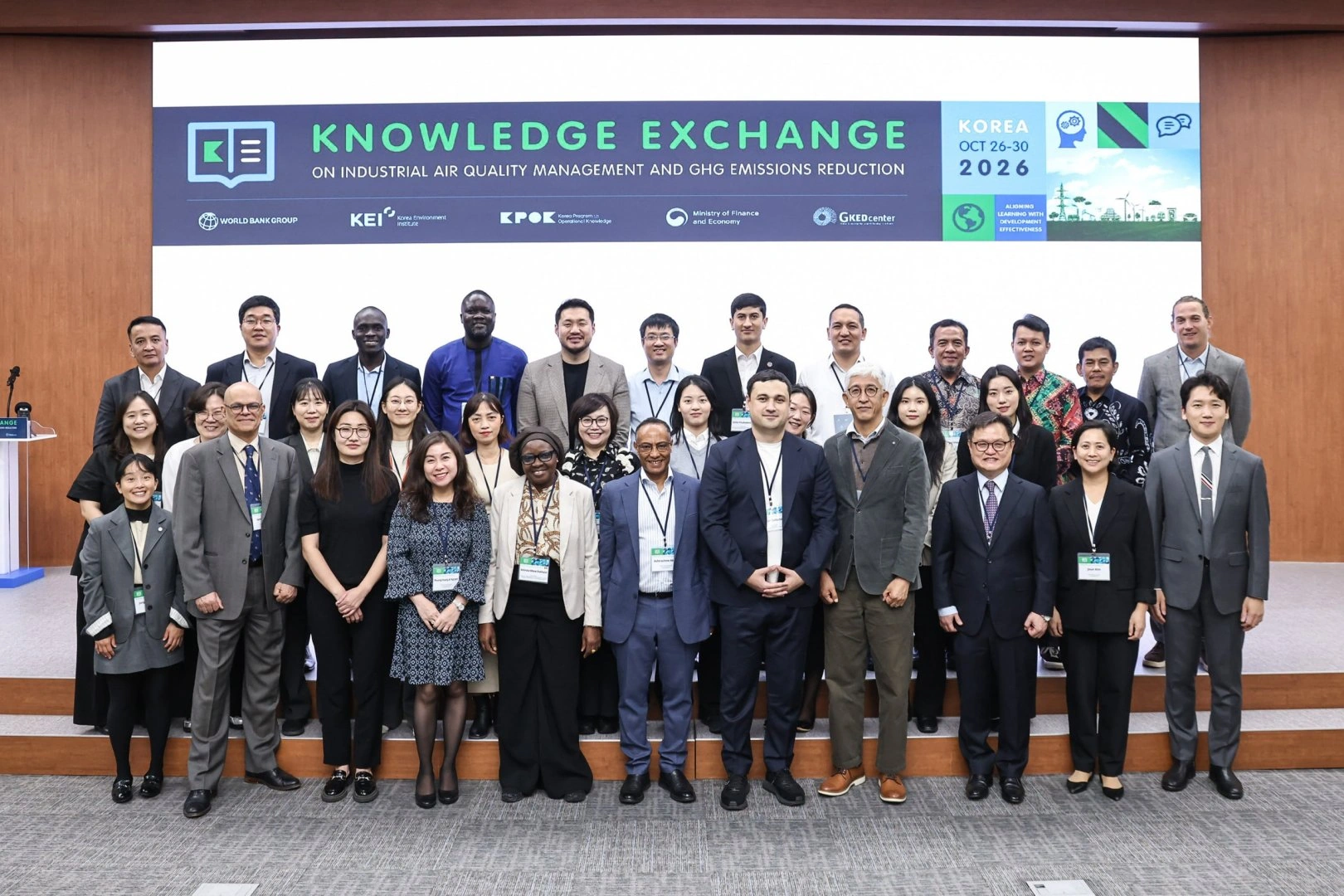
Economy and Finance participated in an international knowledge
exchange program titled “Industrial Air Quality Management and
Greenhouse Gas Emissions Reduction,” held in Seoul from October 26
to 30.
The program was organized by the World Bank, the Korea
Environment Institute (KEI) and the Seoul Global Knowledge Exchange
and Development Center (GKEDC). Representatives from Uzbekistan,
Indonesia, Mongolia, Senegal and Vietnam also took part.
During the program, participants studied South Korea’s practices
in air quality monitoring, industrial emissions control and
greenhouse gas accounting.
They also learned about AirKorea, a system that provides
real-time ambient air quality monitoring, and CleanSYS, which
continuously monitors emissions from industrial facilities.
As part of the program, the Uzbek delegation visited the Korea
Environment Corporation (K-eco), the Greenhouse Gas Inventory and
Research Center (GIR), the National Institute of Environmental
Research (NIER) and the Dangjin power plant complex. The visits
focused on environmental monitoring systems and industrial
emissions management practices.
The experience gained during the program is expected to support
the implementation of Uzbekistan’s nationwide Clean Air project and
the preparation of an investment project to improve ambient air
quality in cooperation with the World Bank.
At the end of the program, the Uzbek delegation presented the
country’s national action plan to South Korean experts and World
Bank representatives, outlining its approach to tackling air
pollution and strengthening environmental management.