BAKU, Azerbaijan, October 30. Azerbaijani
President Ilham Aliyev did not travel to Ankara, but his name was
nevertheless at the center of the Organization of Turkic States
(OTS) summit. One of the most notable moments of the 13th summit
came when Uzbek President Shavkat Mirziyoyev took the floor.
“I express my deep gratitude to His Excellency the President of
the Republic of Azerbaijan, the esteemed Ilham Heydarovich Aliyev,
for the significant work carried out by Azerbaijan during its
chairmanship of the Organization to strengthen the fraternal ties
among Turkic peoples and elevate our relations to a new level,” he
said from the summit podium.
Mirziyoyev did more than acknowledge the leader of the outgoing
OTS chair. He addressed President Ilham Aliyev by his full name and
explicitly credited him with two achievements: strengthening the
bonds among Turkic peoples and taking relations within the OTS to a
new level. And these words were spoken neither in Baku nor in
Tashkent, but in Ankara, in the presence of the leaders of the
Turkic world, at a time when some Turkish commentators had chosen
to speak about the Azerbaijani leader in a very different tone.
Mirziyoyev was not alone. Kazakh President Kassym-Jomart Tokayev
also thanked Azerbaijan for its contribution to the Organization's
work during its chairmanship. In the same address, he emphasized
that respect for the sovereignty and national interests of member
states remains a fundamental principle of cooperation. Against the
backdrop of recent weeks, this statement sounds almost like a
restatement of the very position defended by Baku.
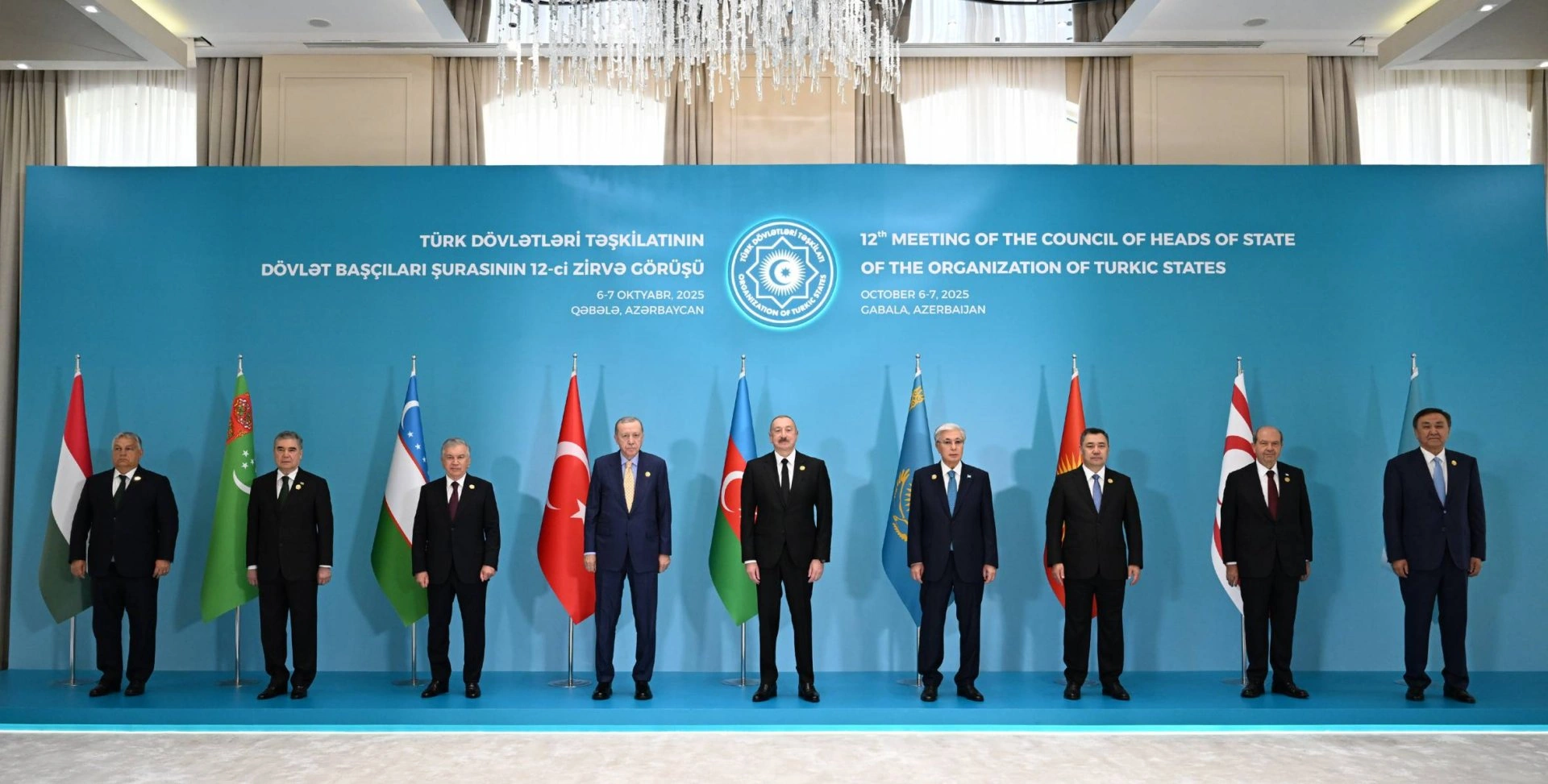
These assessments reflect a concrete year of work. Azerbaijan
assumed the OTS chairmanship in October 2025 at the summit in
Gabala, where President Ilham Aliyev proposed that Turkic states
act as a single center of power. Over the past year, Baku hosted
the second meeting of OTS heads of government and vice presidents,
while the Azerbaijani leader took part in the informal summit in
Turkistan. It was there, in May 2026, that Mirziyoyev had already
thanked President Ilham Aliyev for his effective chairmanship and
efforts to strengthen the Organization's international
standing.
Mirziyoyev's words are also significant because Tashkent has a
particular history with President Ilham Aliyev's Turkic-oriented
foreign policy. It was at the 2019 summit in Baku that Uzbekistan
became a full member of the Organization. In 2021, in Istanbul,
Mirziyoyev opened his address by thanking President Ilham Aliyev
for his productive chairmanship, congratulated the Azerbaijani
people on Victory Day, and personally congratulated the Azerbaijani
president on receiving the Supreme Order of the Turkic World. In
2024, in Shusha, he recalled the words of Heydar Aliyev: “Without
Shusha, there is no Karabakh; without Karabakh, there is no
Azerbaijan.”
These episodes form a consistent pattern. The leader of Central
Asia's most populous country has repeatedly and publicly recognized
President Ilham Aliyev's role in the Turkic world at different
international forums. This is not an assessment made at a single
summit, but a position Tashkent has expressed over five years - in
Istanbul, Shusha, Turkistan and now Ankara.
This is the main significance of what happened in Ankara.
President Ilham Aliyev's standing in the Turkic world does not
depend on whether he is seated at the negotiating table on any
given day. He was not in the room, yet the leaders of Uzbekistan
and Kazakhstan considered it important to recognize Azerbaijan's
contribution from the summit podium, while Mirziyoyev went further
and addressed President Ilham Aliyev by name. This is how partners
speak of a leader whose work is recognized by all participants and
whose place in Turkic politics is determined neither by protocol
nor by anyone else's approval.
There is also a symbolic detail in this story that is worth
remembering in Türkiye. In March 2023, following the devastating
earthquake, an extraordinary OTS summit was held in Ankara at the
initiative of President Ilham Aliyev. It had originally been
planned for Shusha, but President Ilham Aliyev proposed moving the
meeting to the Turkish capital to show solidarity with a brotherly
country in its time of need. Azerbaijan gave up its venue and its
symbolic moment in favor of Ankara because that is what brothers
do.
Three years later, in that same Ankara, Azerbaijan's partners in
the Turkic world reminded the Turkish hosts of President Ilham
Aliyev's role. Recognition of Azerbaijan's contribution came from
Tashkent and Astana at a time when some voices in Türkiye were
attempting to downplay it. The conclusion is clear: the Turkic
world recognizes and remembers those who helped build it. And that
recognition does not require President Ilham Aliyev to be
physically present in the room.