BAKU, Azerbaijan, August 7. Kazakhstan’s
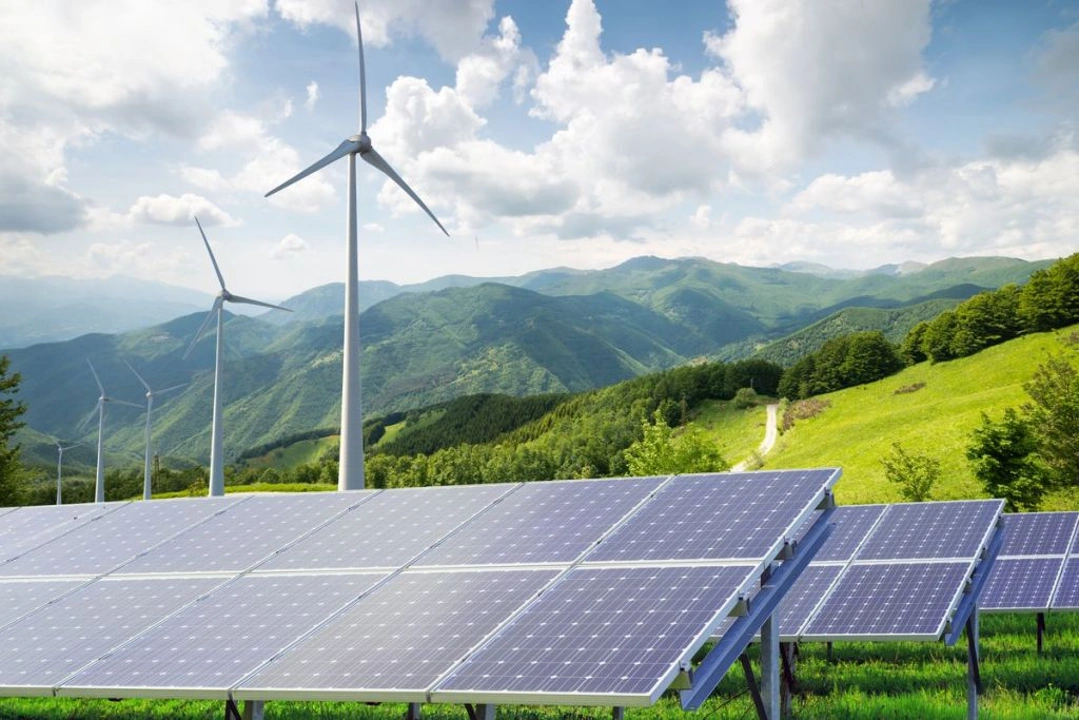
renewable energy output reached 8.6 billion kWh in 2025, accounting
for 7% of total electricity generation and exceeding the
government’s target for growth from the 2022 level.
According to the government of Kazakhstan, the renewable
generation increased from 5.11 billion kWh in 2022 to 8.6 billion
kWh in 2025, representing a 1.7-fold increase and surpassing the
presidential target of a 1.5-fold rise.
The growth was supported by renewable energy auctions,
investment attraction measures and the commissioning of new
facilities. In 2025, Kazakhstan launched nine renewable energy
projects with a combined capacity of 503.5 MW. The country plans to
complete ten renewable energy projects with a total capacity of 245
MW in 2026, including four wind farms, five solar power plants and
one hydropower facility. Seven of these projects with a combined
capacity of 212 MW have already been commissioned.
Trend’s analysis
shows that Kazakhstan’s 1.7-fold increase in renewable energy
generation between 2022 and 2025 represents a strong performance
against the initial growth benchmark. Trend’s calculations show that the 8.6 billion
kWh generated from renewable sources in 2025 corresponds to around
7% of total electricity generation, based on national output of
123.1 billion kWh.
The next milestone - increasing the renewable energy share to
15% by 2030 - will require continued expansion of generation
capacity. Assuming electricity demand grows moderately to around
135 billion kWh by 2030, renewable generation would need to reach
approximately 18.4 billion kWh annually. This means adding around
9.8 billion kWh of new renewable output over five years, requiring
a growth rate broadly comparable with the pace achieved between
2022 and 2025.
The key challenge for the next stage will be maintaining a
steady pipeline of projects and ensuring that power infrastructure
develops alongside generation capacity. Kazakhstan commissioned
more than 500 MW of renewable capacity in 2025, while projects
planned for 2026 represent a smaller volume, highlighting the
importance of accelerating new investment cycles.
The Just Energy Transition Investment Platform (QaJET), launched
by Kazakhstan and the European Bank for Reconstruction and
Development (EBRD), is expected to become one of the main
mechanisms supporting this expansion. As EBRD Director Sule Kilic
told Trend in an
exclusive interview, the platform is expected to mobilize up to 20
billion euros and support the deployment of 10 GW of renewable
capacity by 2035.
Kilic noted that the EBRD has already financed more than 6.5 GW
of installed renewable energy capacity across Central Asia and
mobilized 4.2 billion euros for the region’s energy sector.
According to her, the bank’s approach focuses not only on renewable
generation but also on modernizing electricity networks to ensure
the reliable integration of solar and wind power. "Since the 1990s,
we have supported seven KEGOC projects, most recently the
Integration of the West Zone Project, which connects the previously
isolated western power zone with the rest of the country via more
than 600 kilometres of high-voltage transmission lines," Kilic
said.
The first project supported under the QaJET platform - the 1 GW
Mirny Wind project developed by TotalEnergies and local partners -
includes a 300 MW battery energy storage system with a capacity of
600 MWh. The EBRD mobilized around $550 million for the project,
with the storage component designed to improve flexibility and
support the stable integration of renewable generation into
Kazakhstan’s power system.
Beyond financing, Kazakhstan’s renewable energy expansion is
also creating demand for technological cooperation. Julia
Horodecka, Head of the Polish Investment and Trade Agency’s Foreign
Trade Office in Astana, told Trend that Poland’s experience in renewable energy
development and energy modernization could support Kazakhstan and
other Central Asian countries. "On the one hand, Kazakhstan remains
a major producer of energy resources; on the other, it is
consistently developing and implementing renewable energy sources,
modernising its energy infrastructure and striving for
decarbonisation and climate neutrality," Horodecka said.
She noted that Kazakhstan’s priorities include new generation
capacity, renewable energy development, modernization of
transmission grids and combined heat and power plants. According to
Horodecka, there is also significant potential for cooperation in
areas such as energy efficiency, water management, waste management
and digital solutions for the energy sector. "In this context,
there is considerable scope for the implementation of Polish
technologies – both in the energy sector and in related areas such
as water management, energy efficiency and waste management," she
added.
Kazakhstan’s renewable energy share remains below the global
average, reflecting the country’s traditional reliance on
coal-based generation and the structure of its energy system.
However, the recent pace of renewable deployment, combined with
international financing platforms and growing technology
cooperation, indicates that the country has entered a new stage of
its energy transition. The focus is gradually shifting from simply
adding renewable capacity to building a more flexible energy system
capable of integrating larger volumes of clean power through
stronger grids, storage solutions and improved efficiency.