BAKU, Azerbaijan, September 2. Uzbekistan plans
to increase the share of locally produced goods and equipment in
its $9.5 billion integrated nuclear power plant project in the
Jizzakh region to at least 30%.
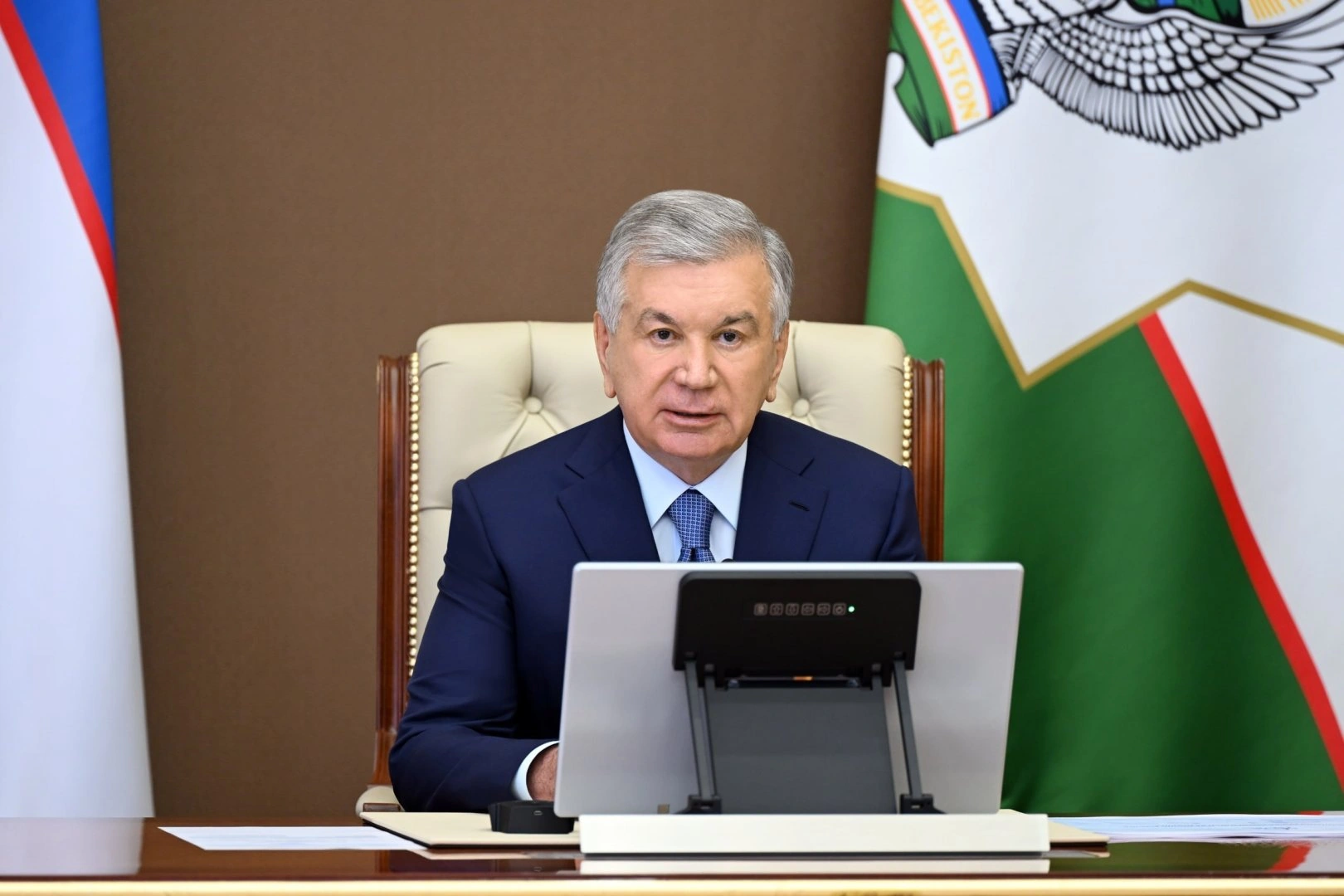
This was announced in a statement by the press service of the
Uzbek president, citing remarks by President Shavkat Mirziyoyev
during a visit to the construction site of the facility and a
planned satellite town for nuclear industry workers.
According to the information, the construction of the integrated
nuclear power plant entered an active phase on June 4. Work has so
far included the completion of excavation for the reactor building,
with more than 1 million cubic meters of soil removed. A total of
916 cubic meters of concrete has been poured for the foundation
slab, while earthworks have been completed across 100 hectares at
the construction and installation base.
About 450 workers and specialists and more than 100 pieces of
specialized equipment are currently involved in construction.
The project is expected to use around 3,000 types of products
and equipment. Preliminary estimates put the share of local
products at 21%, or about $1.9 billion. Mirziyoyev said the figure
was insufficient and instructed officials to raise local content to
at least 30%.
“Quality and safety of construction must remain an unconditional
priority, and all work must fully comply with IAEA requirements and
international standards,” the statement said.
The president also ordered that national companies carry out 65%
of construction and installation work and that the project involve
about 7,000 local workers and specialists.
To support localization, it was proposed to establish a
200-hectare industrial zone in Farish district focused on
construction materials. At least 100 joint ventures are expected to
operate there, while technology transfer would enable local
production across 15 areas.
Mirziyoyev approved the proposal and instructed officials to
submit a draft decision by the end of the year providing tax and
customs incentives for companies operating in the industrial
zone.
The project also includes extensive external infrastructure.
Plans call for the construction of 388 kilometers of power
transmission lines, a 110-kilovolt substation, 21 kilometers of
drinking-water pipelines, 120 kilometers of technical water-supply
networks, 39.5 kilometers of roads and 11 kilometers of railway
lines. The president called for local goods and services to account
for 60%-70% of procurement for these infrastructure projects.
A comprehensive International Atomic Energy Agency (IAEA)
assessment mission conducted from June 22-26 gave a high assessment
of the development of Uzbekistan’s national nuclear infrastructure,
according to the presentation.
The government is also developing a satellite town for workers,
specialists and their families. The 200-hectare town is planned to
include around 10,000 apartments for nearly 33,000 residents, with
3,000 apartments planned during the first phase.
The town will feature energy-efficient high-rise buildings,
schools, preschools, healthcare and sports facilities, cultural
venues, recreational areas and extensive green spaces. Modern
insulation technologies, alternative energy sources and smart
lighting systems are planned for the development.
Moreover, It was proposed to establish a joint venture with
leading international engineering companies to strengthen project
management, technical oversight and independent reviews of
technological solutions. Around 1,000 industry standards are also
expected to be adapted to Uzbekistan’s national system.
Work is also underway to prepare qualified personnel for the
future plant. Since 2023, 216 students have graduated from the
Tashkent branch of Russia’s National Research Nuclear University,
with 83 continuing their master’s and postgraduate studies at
universities in China, Hungary, France, Italy and South Korea.
Another 100 specialists are currently being trained at four Uzbek
universities.
The scale of the project and its localization requirements
indicate that the nuclear plant is being positioned not only as a
major source of future baseload electricity but also as a catalyst
for domestic industrial production, engineering capabilities and
workforce development.
Increasing local content from 21% to at least 30% would raise
the value of domestically supplied goods from the preliminary $1.9
billion level to roughly $2.85 billion, assuming the overall
project cost remains unchanged. This would represent an additional
potential localization volume of about $950 million.
Mirziyoyev instructed officials to ensure high construction
quality and safety, meet project deadlines, expand the
participation of domestic companies, and coordinate infrastructure
development and workforce-training programs.