BAKU, Azerbaijan, October 23.
OPEC has allocated $250 million for the missing railway section of
the Middle Corridor in Türkiye.
This was announced in a report published on the OPEC page.
According to the information, the OPEC Fund has joined a
large-scale international initiative to eliminate the missing link
in railway communication between Asia and Europe.
“A loan of $250 million will be used to build a new
127-kilometer railway line, which will bypass the Istanbul
metropolitan area and provide high-capacity rail links across the
Bosphorus.
It is the largest single financing in the institution’s history
and forms part of an approved package of up to $500 million. The
project will address a key infrastructure gap on three
international trade routes passing through Istanbul and served by
rail: the Trans-Caspian Middle Corridor, connecting China and
Central Asia with Europe; the Iraq Development Road corridor, which
will link Asia and the European Union through the Middle East and
Türkiye through rail links; the Türkiye-EU corridor, which accounts
for a third of Türkiye's international trade," OPEC said.
According to the report, the project will redirect part of the
cargo transportation from road to electrified rail transport with
lower carbon emissions, and will also strengthen Türkiye’s position
as a logistics hub connecting Europe, Asia, and the Middle
East.
“The total investment of $8.3 billion is being provided by an
international group of sponsors led and administered by the World
Bank. They include the Asian Development Bank, the Asian
Infrastructure Investment Bank, the Islamic Development Bank, the
European Bank for Reconstruction and Development and the European
Investment Bank, alongside the Government of Türkiye.
Istanbul is one of the largest cities in the world, located on
two continents. Currently, rail traffic across the Bosphorus Strait
is carried out through the Marmaray tunnel, which was built
primarily for passenger traffic. Freight trains can only use the
tunnel during limited nighttime hours, keeping rail freight
capacity through the strait to about 3 million tons a year.
To address this limitation, a new 127-kilometer electrified rail
corridor will be built between Çayırova on the Asian side and
Çatalca on the European side. The crossing of the Bosphorus will be
carried out via the Yavuz Sultan Selim Bridge, also known as the
Third Bridge," OPEC noted.
The report pointed out that the new line will be double-track,
electrified, equipped with a full-fledged signaling system, and
designed for both passenger and freight traffic.
“Thanks to the project, the annual capacity of rail freight
traffic across the Bosphorus will increase to 50 million tons.
It will carry both passengers and freight, and will connect
Istanbul Airport and Sabiha Gökçen Airport and the national rail
network.
Freight journey times between Çayırova and Çatalca will fall
from around 13 hours to 3.6 hours. Travel by public transport
between the two airports will drop from approximately two hours to
65 minutes.
The OPEC Fund signed its first loan agreement with Türkiye in
1979. It has since approved almost $850 million for transport
infrastructure, agriculture, health, energy and other sectors,
including recent loans addressing food security and climate
resilience,” the report added.
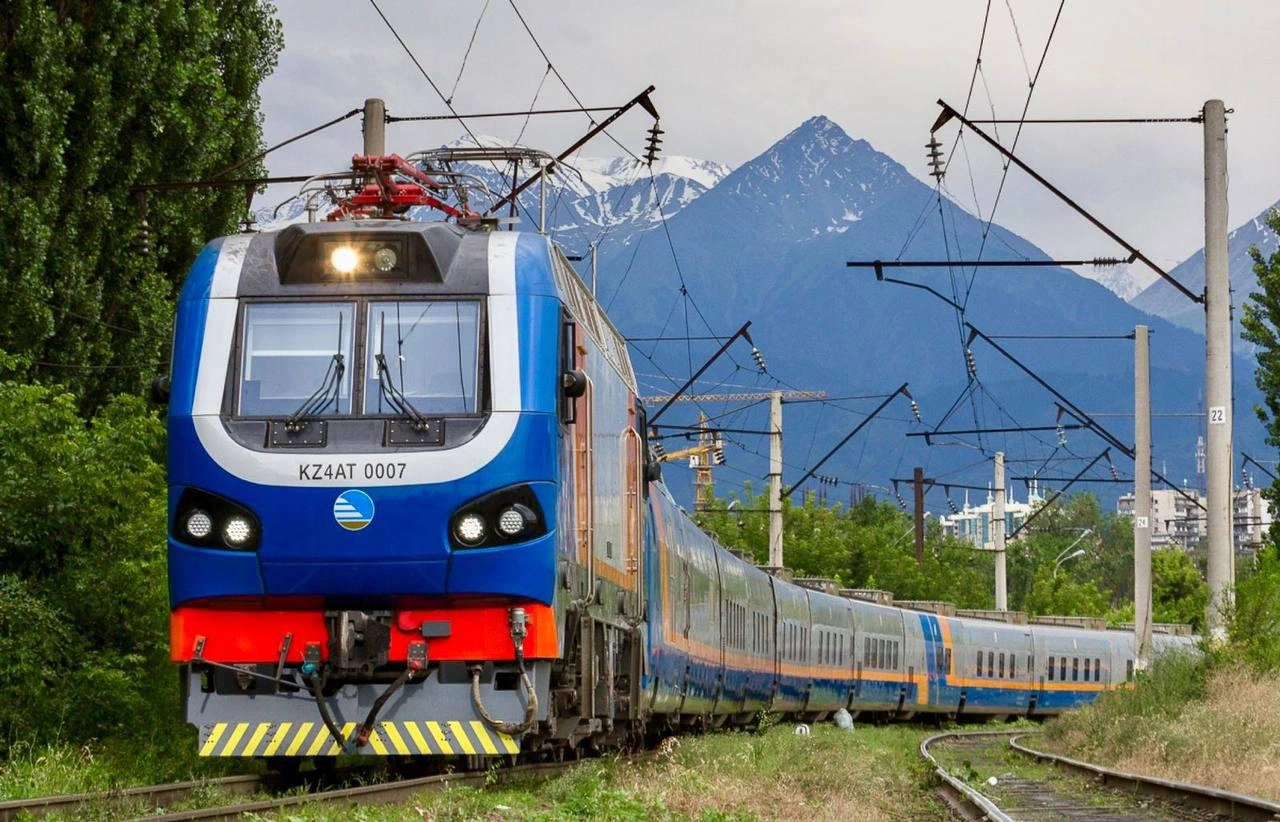
The Middle Corridor is a multimodal trade and transport route
connecting Asia and Europe through Central Asia, the Caspian Sea,
Azerbaijan, Georgia, and Türkiye. The route begins in China and
runs through Central Asia before crossing the Caspian Sea and
continuing through Azerbaijan, Georgia, and Türkiye to European
markets.
The Middle Corridor is being developed as an alternative to
traditional northern and southern transport routes, providing
connectivity between Asian markets, including China, and
Europe.