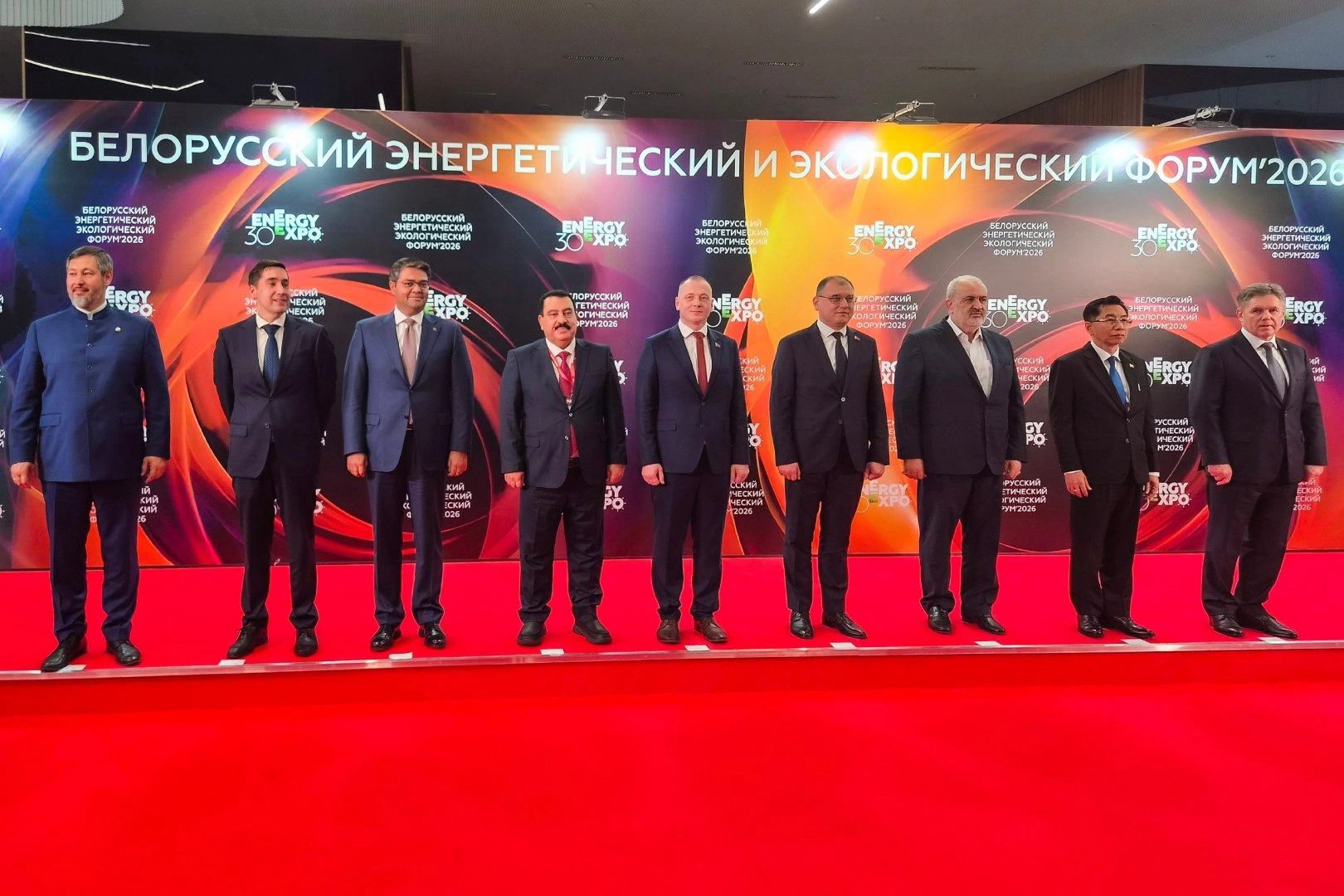
BAKU, Azerbaijan, October 27. Uzbekistan is
emphasizing international cooperation, workforce development, and
domestic technological capabilities as it advances its nuclear
energy program, Uzbek Atomic Energy Agency Director Azim
Akhmedkhadjaev said at the EnergyExpo 2026 forum in Minsk on
October 27.
According to Uzatom, Akhmedkhadjaev spoke during a high-level
international roundtable titled “The Formula for Energy
Independence: Economy, Integration and Development,” held as part
of the 30th Belarusian Energy and Environmental Forum, EnergyExpo
2026.
The event brought together senior officials from energy agencies
and major organizations across the Commonwealth of Independent
States (CIS), as well as representatives of regional integration
groups. Discussions focused on energy independence, electricity
system management, financial instruments, infrastructure
investment, and regional energy security.
“Energy independence is a comprehensive concept. It involves not
only the ability to generate the required amount of electricity,
but also having our own specialists, engineering expertise,
industrial base and technological capabilities,” Akhmedkhadjaev
said.
He added that energy independence did not mean isolation, but
could be strengthened through effective international cooperation
and integration.
Moreover, the Uzbek official highlighted the country’s expanding
power system and the practical implementation of an integrated
nuclear power plant project in the Jizzakh region. The planned
facility combines large-capacity and small modular reactors, an
approach intended to support baseload electricity generation while
providing greater flexibility to the power system.
According to Akhmedkhadjaev, the project is also expected to
support the development of a high-technology industry, with an
emphasis on workforce training, localization and nuclear
safety.
He highlighted Belarus’ experience in building and operating the
Belarusian Nuclear Power Plant, as well as developing
infrastructure around the facility, as potentially relevant to
Uzbekistan. Regional cooperation could support specialist training,
scientific and technical exchanges, industrial partnerships and the
sharing of operational expertise.
The roundtable also addressed how regional integration could
help countries improve energy system resilience, strengthen
industrial cooperation and attract investment amid changes in the
global energy landscape.
EnergyExpo 2026 is being held in Minsk through October 30. Its
business program includes conferences, seminars, and roundtables on
energy security, electric transport, energy efficiency,
digitalization, artificial intelligence in the energy sector,
engineering education, environmental protection, and modern
technologies.