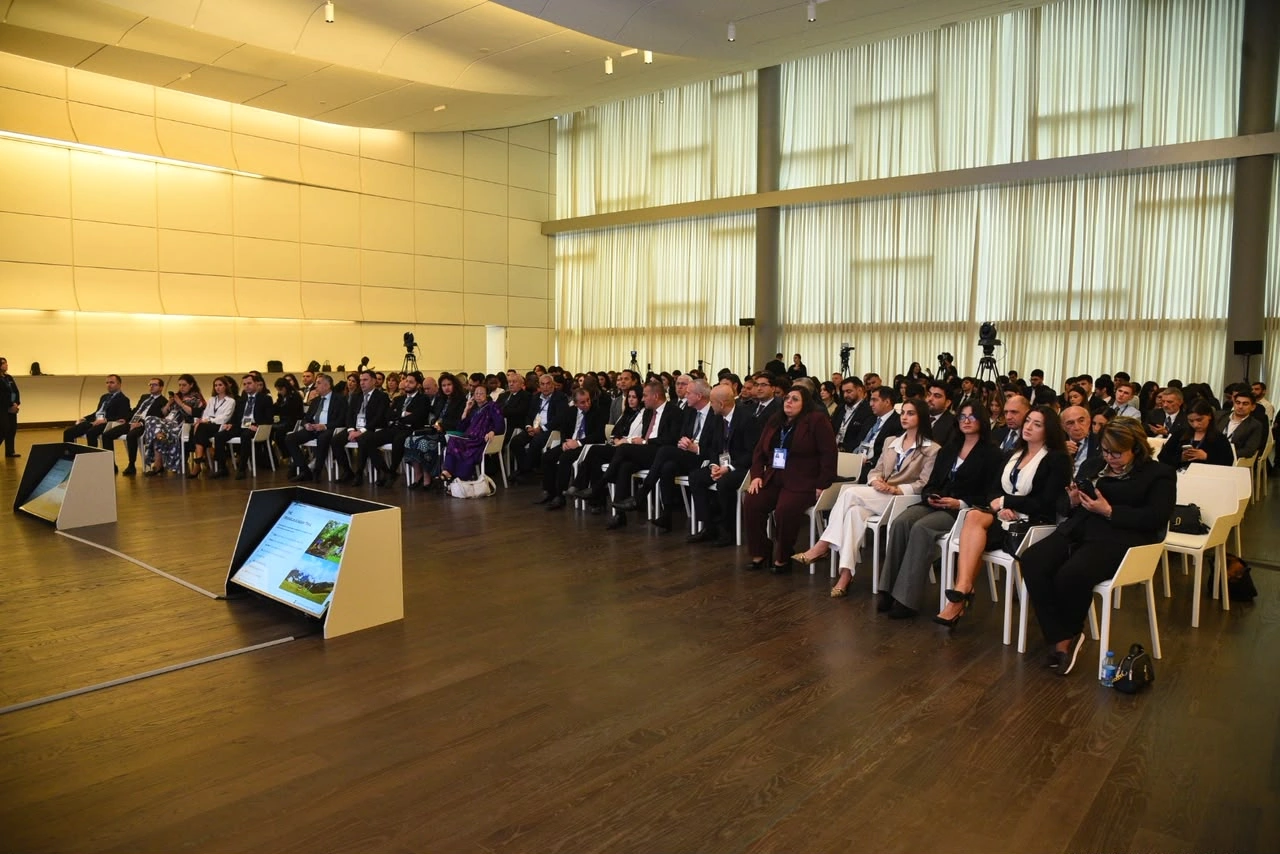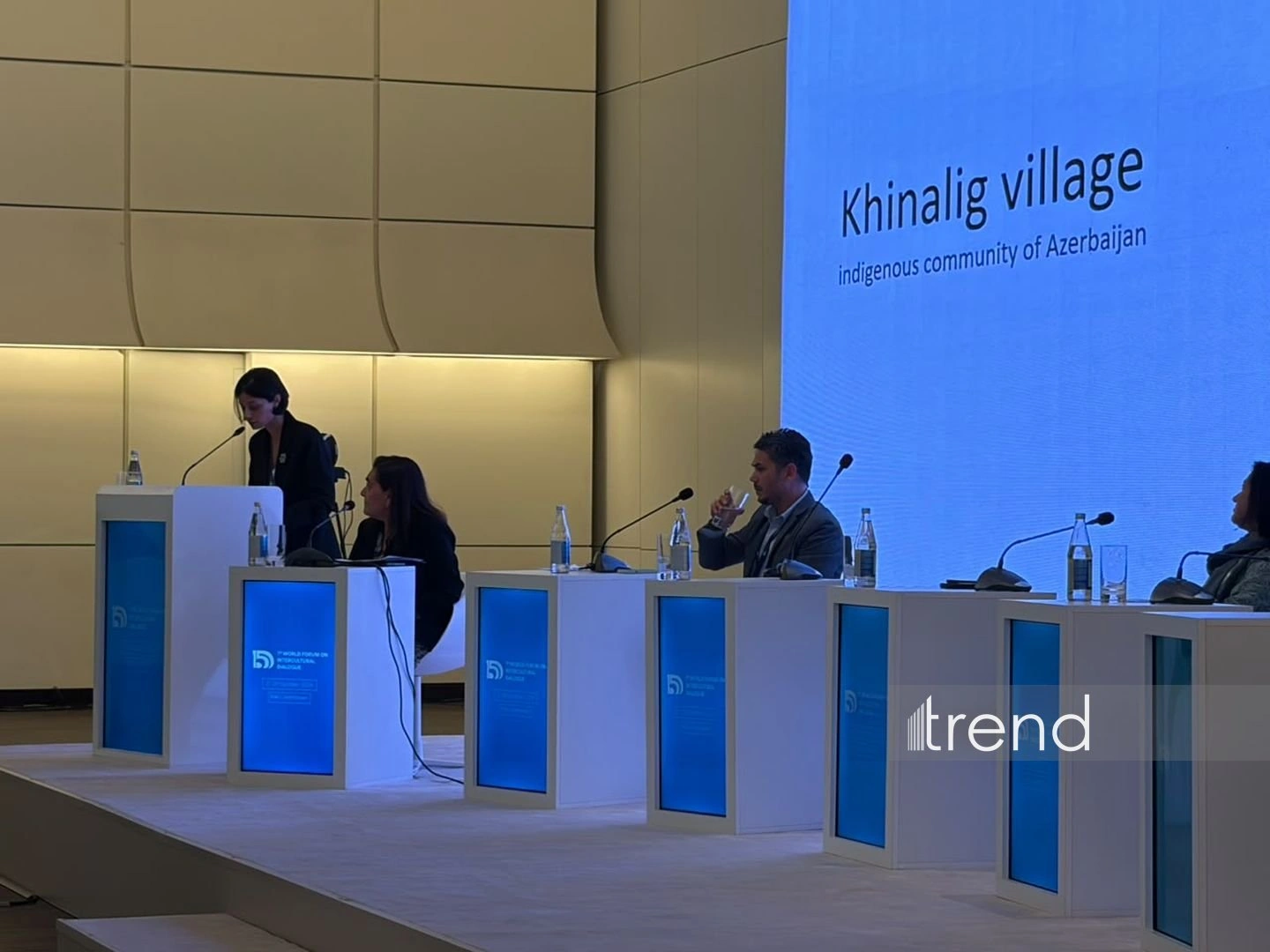
BAKU, Azerbaijan, October 27. The development
of tourism in Azerbaijan’s Khinalig has increased local women's
participation in handicrafts and other tourism-related activities,
Head of the Cultural Heritage Development Division of the Cultural
Heritage Department of the State Tourism Agency, Leyla Musayeva,
said during a discussion titled "Tourism for a shared future: how
inclusivity, equality, and community leadership contribute
meaningfully to peacebuilding" held as part of the 7th World Forum
on Intercultural Dialogue, in Baku on Tuesday, Trend’s correspondent reports
from the event.
She noted that Khinalig, one of the villages located in the
highest mountainous areas of Azerbaijan, was declared a state
reserve in 2007 by the order of President of Azerbaijan Ilham
Aliyev. This was an important step towards protecting the village
from population decline and gradual erosion.
According to Musayeva, the cultural heritage of Khinalig is part
of a wider landscape that connects different regions of Azerbaijan
both physically and culturally. The Migratory Road connecting the
seasonal summer and winter pastures is also included in that
landscape.
"In 2023, after extensive research and the efforts of the State
Tourism Agency, the cultural landscape of Khinalig and Koch Road
was included in the UNESCO World Heritage List," she remarked.
The agency’s representative added that restoration and
conservation works were carried out in Khinalig from 2021 through
2024. These works and the recognition of the area as a UNESCO World
Heritage Site have strengthened efforts to preserve the village's
architectural heritage and traditional settlement structure.
Furthermore, Musayeva emphasized the importance of preserving
local traditions and language, promoting the younger generation's
commitment to heritage. According to her, tourism can create new
economic opportunities, increase awareness of local heritage, and
encourage greater community participation in the preservation and
development of the countryside.