BAKU, Azerbaijan, October 27. Despite years of
sanctions against Iran, the country has increased its natural gas
production capacity to 300 billion cubic meters, Iranian President
Masoud Pezeshkian said.
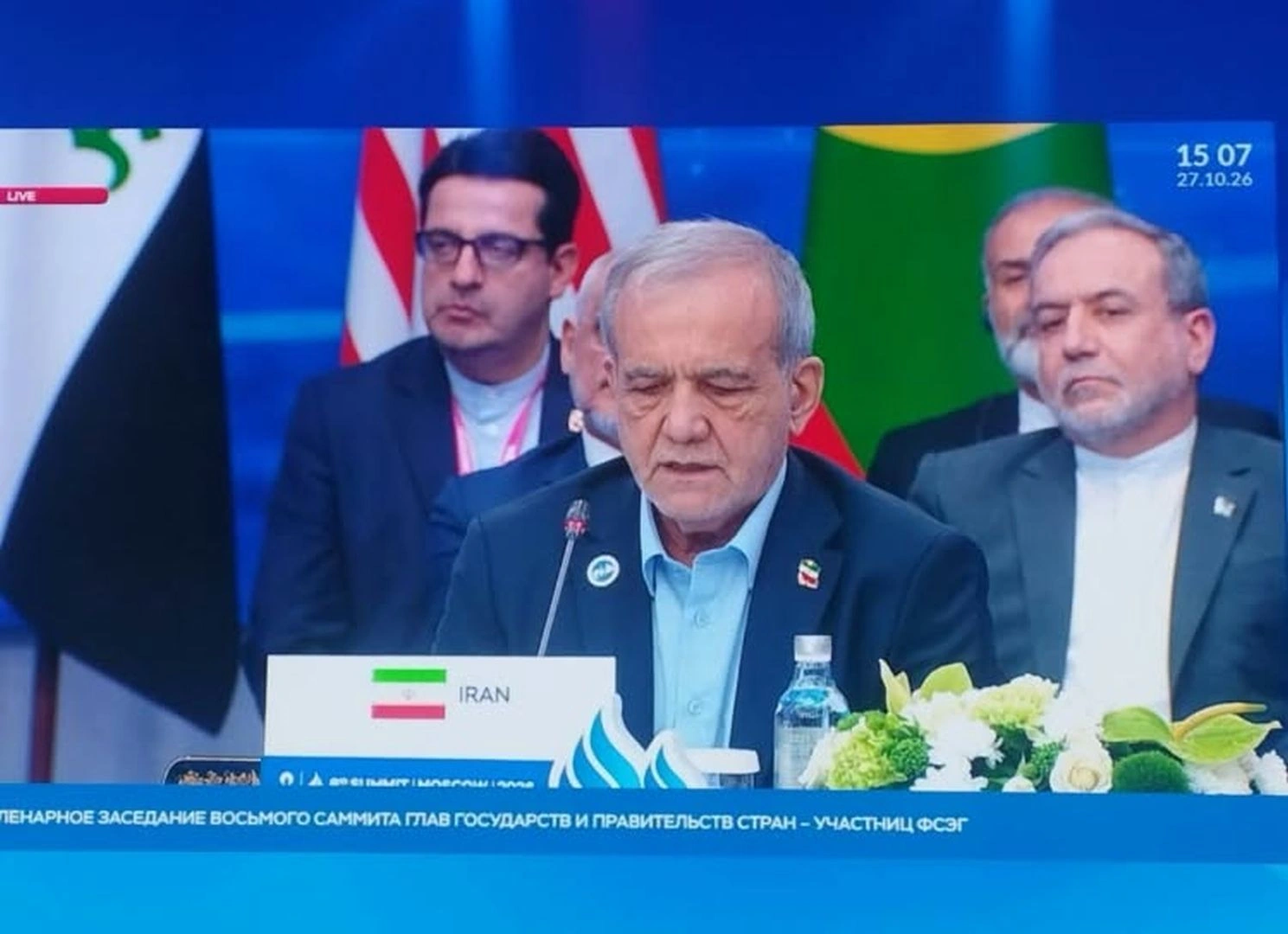
According to the Iranian president’s news portal, the President
made the announcement on Tuesday (October 27) at the 8th summit of
the Gas Exporting Countries Forum (GECF) in Moscow.
"By increasing its natural gas production capacity, Iran has
been able to maintain its position as the world’s third-largest
natural gas producer," he said.
The Iranian president added that Iran is one of the leading
countries in terms of natural gas consumption, accounting for 70%
of its energy mix. Currently, 95% of Iran’s population uses natural
gas.
Pezeshkian noted that Iran can significantly enhance its energy
stability on a global scale, given its strategic location at the
center of the world’s most important energy corridors. In addition
to Iran’s existing gas sector potential, there are favorable
opportunities for cooperation between the private sectors of the
member countries of the Gas Exporting Countries Forum.
The president emphasized that foreign investors can confidently
take advantage of the incentives offered in the oil, gas, and
petrochemical sectors and benefit from Iran’s opportunities on a
mutually beneficial basis.
“Developments in the global energy market are prompting
gas-exporting countries to strengthen cooperation in the areas of
strategic management and technical and engineering operations. In
strategic management, greater attention should be paid to
increasing the volume of natural gas trade at the regional and
global levels and to market stability. In the technical and
engineering sphere, the main task for member countries of the Gas
Exporting Countries Forum is to develop joint investments in gas
processing and distribution, from production through processing,
transportation, and consumption,” he added.
Pezeshkian noted that, at the same time, cooperation should
focus on improving technological capabilities to increase
efficiency and reduce the negative environmental impact of
production and consumption. In this regard, the existing potential
of member countries can be transformed into projects of mutual
interest, creating conditions for the effective implementation of
the forum’s long-term strategy in line with long-term supply and
demand trends.
“The U.S. imposition of sanctions and a naval and air blockade
against Iran, as well as pressure on other countries to enforce
this blockade, are considered illegal actions by Iran. This is
because these actions seriously threaten the stability of energy
markets,” he added.