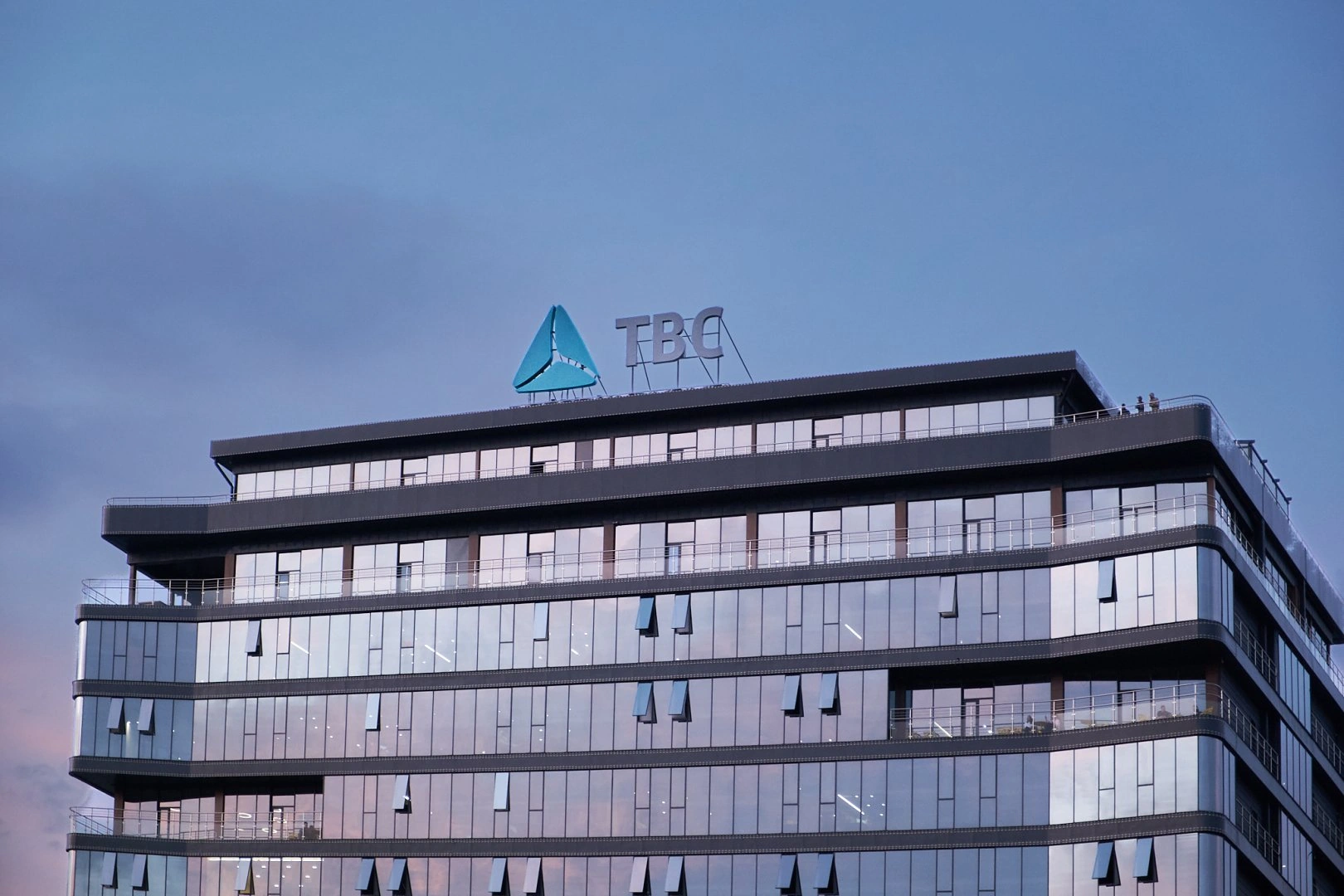
BAKU, Azerbaijan, August 13. TBC Group's
Georgian operations are strengthening their position as one of the
region's most digitally engaged banking platforms, with daily
active users of the TBC Georgia app rising 25.9% year-on-year to
686,000 in Q2 2026.
According to the data from TBC, across the group, digital
monthly active users reached 7.215 million, increasing 6%
year-on-year, while total daily active users stood at 2.596
million. Georgia accounted for 1.372 million monthly active digital
users, up 18.9% year-on-year.
The share of daily active users among monthly active users in
Georgia reached 50% in Q2 2026, compared with 47% a year earlier.
This means that every second customer using TBC's digital channels
in Georgia accessed the platform daily. Across the entire group,
the DAU-to-MAU ratio stood at 36%.
According to Trend's analysis, the increase in daily engagement
highlights the depth of digital banking adoption in Georgia. A
DAU-to-MAU ratio of 50% is a strong indicator that the TBC Georgia
application has moved beyond being a supplementary banking channel
and has become a regular financial management tool for a
significant share of customers.
For comparison, banking applications generally record lower
daily engagement levels than consumer technology platforms, as
financial services are typically used less frequently. Against this
background, TBC Georgia's ability to maintain a 50% daily
engagement ratio points to a high level of integration of digital
services into customers' everyday financial activity.
Trend's
calculations show that Georgia is currently the main driver of the
group's digital engagement indicators. The country's digital
monthly active users grew 18.9% year-on-year, compared with 6%
growth at group level. This difference reflects the different
stages of development of TBC's two key markets: Georgia represents
a mature digital banking ecosystem, while Uzbekistan's TBC UZ
operation remains in a scaling phase.
However, Uzbekistan's digital strategy is built around a
different growth model. Rather than replicating Georgia's mature
banking app engagement immediately, TBC Uzbekistan is focusing on
expanding access to financial services through artificial
intelligence, embedded finance and SME solutions.
As TBC Uzbekistan told Trend, the bank's AI banking assistant Lola - based on
proprietary Uzbek- and Russian-language large language models - is
expected to independently resolve up to 30% of customer inquiries
by the end of 2026. "Our proprietary Uzbek- and Russian-language
LLMs allow Lola to handle routine customer interactions with high
accuracy, guiding users through our financial products and everyday
requests. When a human touch is needed, the escalation process to
our support team is completely seamless. With Lola's broader
capabilities, we are taking this to the next level: by the end of
2026, Lola is projected to independently resolve up to 30% of all
inquiries," the bank said.
The Uzbekistan operation is also expanding its role among small
and medium-sized businesses. According to TBC Uzbekistan, MSME
lending, including self-employed customers, accounted for 18% of
the bank's loan portfolio in Q1 2026, with more than 185,000 loans
issued. The bank's TBC Nasiya installment business reached 190,000
active users, while the overall monthly active user base in
Uzbekistan reached 5.8 million, including 67,000 business
clients.
In Trend's
assessment, the difference between the Georgian and Uzbek digital
models reflects two stages of fintech development. Georgia
demonstrates the impact of deep customer engagement within an
established digital banking ecosystem, while Uzbekistan illustrates
a market expansion strategy focused on bringing previously
underserved consumers and businesses into formal financial services
through technology.