TASHKENT, Uzbekistan, August 26. Technology and
digitalization could help address structural constraints in the
Islamic finance industry by expanding market access, improving
cross-border participation and enabling the development of new
financial infrastructure, Secretary-General of the Islamic
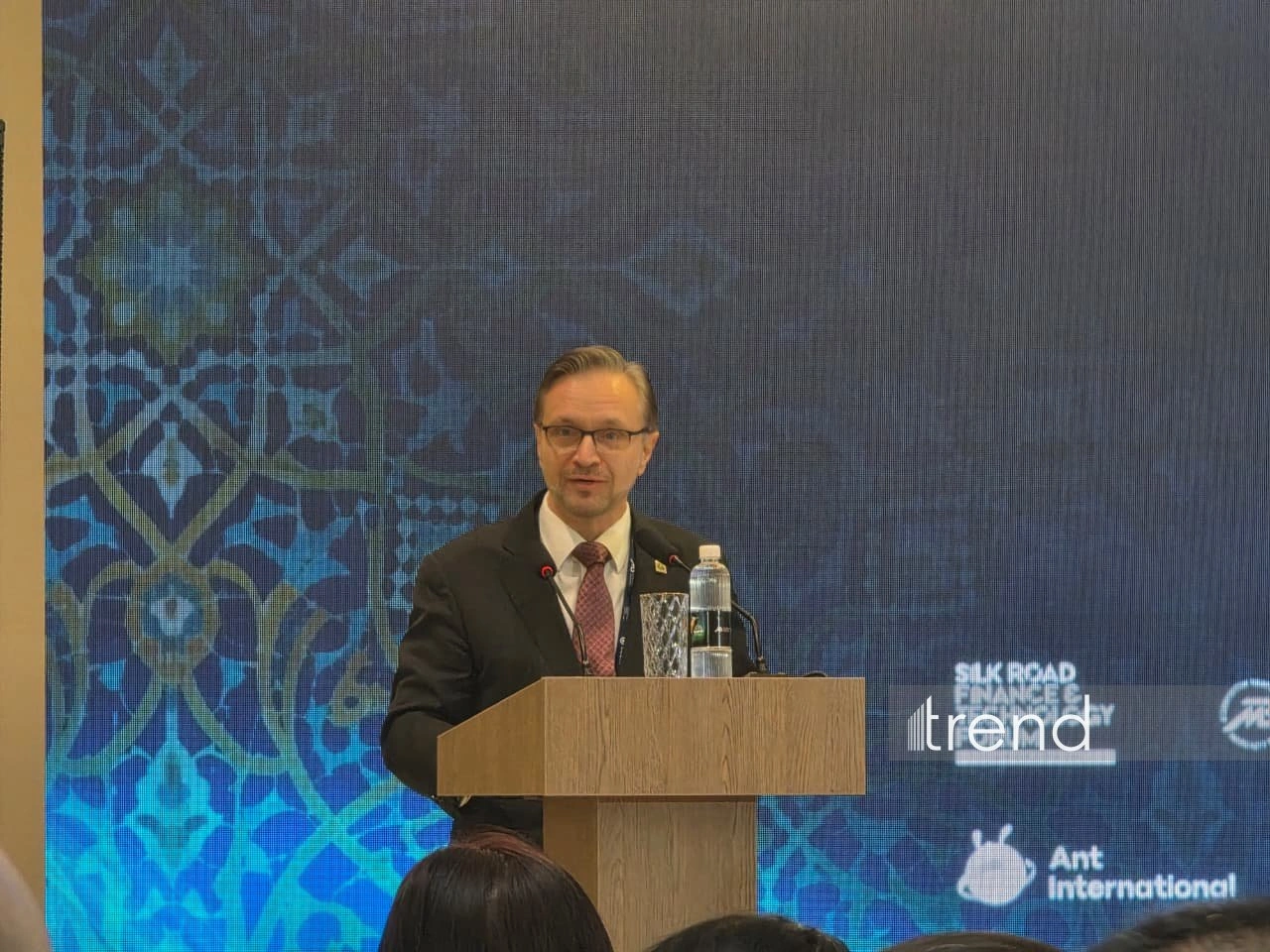
Financial Services Board (IFSB) Dr. Ghiath Shabsigh said, Trend's special correspondent
reports from Tashkent.
Speaking at the Silk Road Finance & Technology Forum in
Tashkent, Shabsigh noted that Islamic finance is expected to become
increasingly important globally over the coming decade,
particularly across the Middle East, North Africa, South Asia and
Southeast Asia.
According to him, the industry has achieved significant scale,
but its financial ecosystem remains unevenly developed. “Islamic
finance has achieved considerable scale, but its overall financial
ecosystem remains unevenly developed. The industry remains heavily
concentrated in banking, which accounts for almost 70% of global
assets,” Shabsigh said.
He noted that Islamic capital and money markets, as well as the
non-bank financial sector, remain relatively underdeveloped in many
jurisdictions. The range of instruments available for investment,
funding, liquidity and risk management also remains limited.
Shabsigh highlighted the sukuk market as an example. While
issuance has grown significantly in recent years, he said, market
depth, secondary-market liquidity and investor diversity remain
areas requiring further development. “These structural constraints
also have potential implications for our central banks. Limited
market depth and a narrow range of instruments leave banks with
fewer options for managing funding and liquidity, particularly
under stress,” he said.
Another issue identified by the IFSB is the emergence of what it
calls “hybrid risk” in Islamic banking. According to Shabsigh, the
balance-sheet characteristics of Islamic banks in some developing
markets are increasingly resembling those of conventional banks,
potentially changing their risk profiles.
At the same time, he said technology could provide new
opportunities to overcome some of the structural barriers facing
the industry. “Technology is an important dimension to how this
infrastructure can develop. The opportunity is not simply to
improve efficiency, but to use technology to overcome frictions
that have limited participation, market access and activity across
jurisdictions in the Islamic finance ecosystem,” Shabsigh said.
He added that digitalization could facilitate greater
cross-border participation and allow individual markets to access a
broader base of investors, capital and financial instruments.
Shabsigh stressed, however, that digital transformation should
go beyond simply transferring existing practices into digital form.
“That should be the ambition of digitalization: not digitalizing
problematic practices or the implication of existing market
structures in digital form, but as solutions to the structural
constraints in the industry,” he said.
According to him, the development of new technologies also
increases the importance of strong regulatory and financial
foundations, as greater speed, scale and interconnectedness can
accelerate the transmission of risks. “This is an important role
for the central banks. As technology drives greater scale, speed
and interconnectedness across markets, it can also accelerate the
materialization and transmission of risks,” Shabsigh said.
He said that the next stage of Islamic finance development
should therefore combine technological innovation with sound
regulatory foundations and standards. “Getting those foundations
right creates the conditions for sound growth, with vulnerabilities
embedded in the system as a force,” he said.
Shabsigh also emphasized the importance of international
cooperation in developing Islamic finance, particularly as
technology makes it easier for national markets to become more
connected.
He said that the industry has an opportunity to develop
financial infrastructure that is better aligned with the specific
requirements of Islamic finance rather than simply adapting
existing conventional structures.
According to the IFSB secretary-general, this could help create
a more diversified, accessible and resilient Islamic financial
system as the sector expands globally.