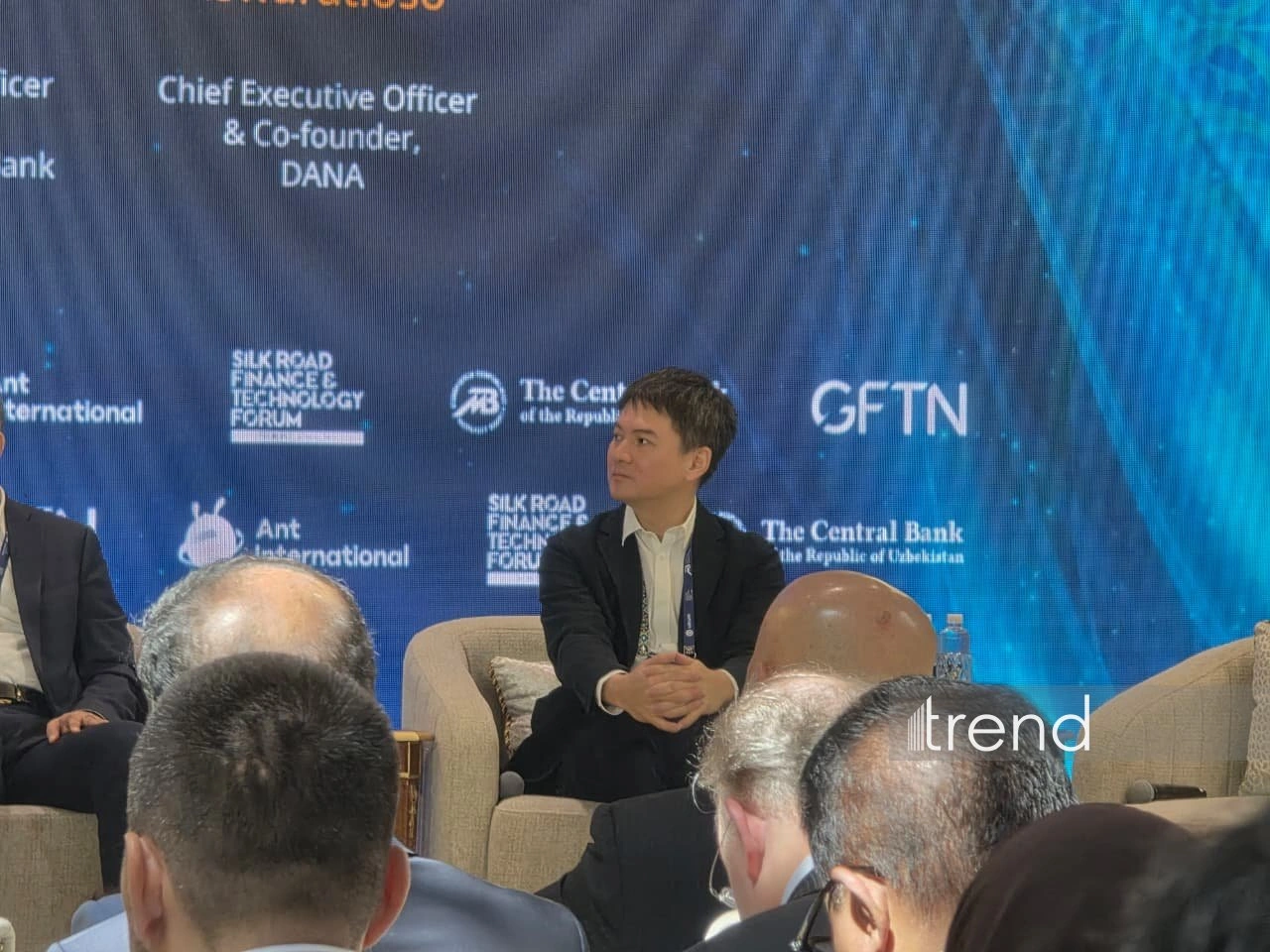
TASHKENT, Uzbekistan, August 26. Standardized
payment infrastructure and continuous dialogue between regulators
and market participants can accelerate fintech development, Vince
Henry Iswaratioso, CEO and Co-founder of Indonesian payment
platform DANA, said, Trend's special correspondent reports from
Tashkent.
Speaking at the Silk Road Finance & Technology Forum, he said
bilateral agreements can provide companies with greater control
over project economics and technology at the early stages of market
development. However, as the market expands, a more standardized
infrastructure becomes increasingly effective.
"At the beginning, we preferred bilateral agreements because
then you have more control over the unit economics and how the
technology works. But then we moved toward a centralized approach
and standardization," Iswaratioso said.
He noted that as the market grows, it becomes less efficient for
individual companies to build their own payment infrastructure and
ecosystems. "I truly believe that a centralized approach is going
to play a big role in making sure that it is the same playing field
for everyone. When that happens, companies automatically become
much more focused on building a better product, instead of everyone
trying to build their own rails," he said.
According to Iswaratioso, the development of QR payments in
Indonesia is an example of how standardization can support market
expansion. A common standard endorsed by the central bank has
enabled market participants to use shared infrastructure rather
than develop separate solutions. "When you talk about QR, everyone
knows it and trusts it because it is endorsed by the central bank.
Everyone is adopting it, so there are no questions — we just use
it," he said.
At the same time, Iswaratioso emphasized that a centralized
approach needs to be complemented by mechanisms for dialogue
between the government, regulators and the private sector.
He highlighted Indonesia's self-regulatory organization (SRO)
initiative, which brings together payment service providers and
other institutions licensed by the central bank. "Every payment
service provider, every institution that has a license from the
central bank, has to be part of that SRO. Automatically, there is a
dialogue where we discuss new products and new regulations,"
Iswaratioso said.
He added that working groups and committees within the SRO
discuss the central bank's development roadmap, including its plans
for the next five years, while regulatory sandboxes help accelerate
the testing of new solutions. "We have working groups and
committees that directly discuss everything on the roadmap of the
central bank for the next five years," he said.
According to Iswaratioso, consistent interaction between
government authorities, regulators and private-sector companies has
become an important factor in the development of Indonesia's
payment market.